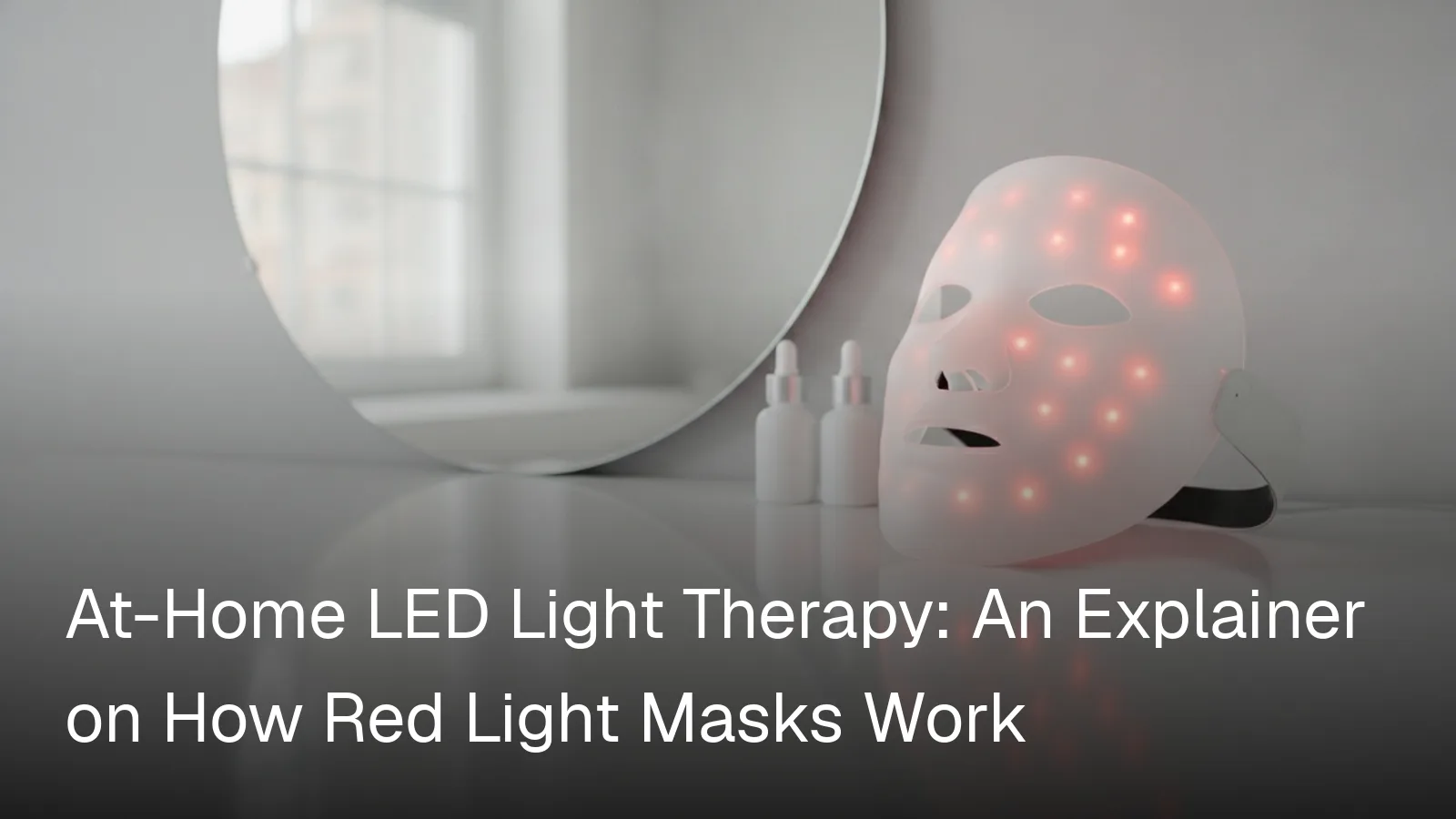
At-home LED light therapy has moved from a specialized clinical treatment to a mainstream skincare staple. Once primarily found in dermatologist offices, these devices now come in various forms, from rigid plastic shells to flexible silicone masks. While the technology was originally studied by NASA in the 1990s to assist with wound healing in space, it is now used by consumers to address concerns like fine lines, acne, and uneven skin texture.
Understanding how at-home LED masks work requires a look at the science of light and skin. These devices do not use heat or lasers; instead, they utilize light-emitting diodes (LEDs) to deliver specific wavelengths of light into the skin’s layers. This process, known as photobiomodulation, triggers cellular changes that can lead to improved skin health over time.
The science of light wavelengths
LED masks work by emitting different colors of light, each corresponding to a specific wavelength that penetrates the skin at different depths. Because different layers of the skin handle different functions, the color of the light determines the specific benefit.
- Red Light: This wavelength penetrates deeper than blue light. It is used to stimulate the production of collagen and elastin, which are essential for skin firmness. It also helps improve blood circulation and can reduce the appearance of fine lines and wrinkles.
- Blue Light: This wavelength affects the uppermost layer of the skin. It is frequently used to treat mild to moderate acne because it has anti-inflammatory effects and can reduce the amount of oil the skin produces.
- Near-Infrared Light: This wavelength reaches the deepest tissues. It is commonly utilized to reduce inflammation and accelerate the healing of wounds or skin damage.
How at-home LED masks work in a daily routine
Unlike professional medical-grade machines, at-home LED masks are designed for lower-intensity use. The primary difference between a clinical device and a consumer mask is the strength of the light, the number of bulbs, and how close they sit to the skin. At-home versions are less powerful to ensure they are safe for unsupervised use. This means that while clinical treatments might be spaced weeks apart, at-home masks require a consistent commitment to show results.
Standard session guidelines often recommend wearing the mask for about 10 minutes. Most manufacturers suggest using the device on clean skin, as some skincare ingredients can interfere with light penetration. Because the results are cumulative, users often need to maintain a routine for several weeks before noticing improvements in brightness, smoothness, or redness.
Evaluating device specifications and quality
With masks ranging in price from £40 to £1,500, it can be difficult to determine which device is worth the investment. When evaluating a mask, look for the number of LEDs and the specific wavelengths provided. For example, some newer silicone masks feature 66 LEDs and offer three distinct wavelengths to target texture, firmness, and photodamage simultaneously.
Another critical factor is the power level, often measured in milliwatts per centimeter. A device must reach a certain power threshold to be effective, but it should not generate significant heat. High-quality masks are designed to provide “low-level” light therapy, which stimulates the cells without the risk of burning the skin. Flexible silicone models have become popular because they sit closer to the face, which can help the light penetrate more effectively than rigid masks that may leave gaps.
Safety and maintenance for at-home devices
LED light therapy is generally considered a non-invasive and safe treatment for most skin types. However, there are a few precautions to keep in mind. While the light is not as intense as a laser, many experts recommend using eye protection or choosing masks with built-in eye shields to prevent discomfort.
To keep your device functioning correctly and your skin healthy, regular maintenance is necessary:
- Cleaning: Wipe the interior of the mask with a gentle cloth or alcohol wipe after each use to prevent bacteria buildup.
- Storage: Store flexible masks flat to avoid damaging the internal wiring and LEDs.
- Battery Care: Follow manufacturer instructions regarding charging to ensure the LEDs receive consistent power, which is vital for maintaining the correct light intensity.
Frequently asked questions
Can LED masks treat skin cancer?
While LED therapy is used for many skin conditions, it is not a primary treatment for cancer. In some specific medical cases, it may be used to treat small, superficial basal cell carcinoma, but this should only be done by a medical professional in a clinical setting.
How long does it take to see results?
Results from at-home devices are not immediate. Because the process relies on cellular regeneration and collagen building, most users need to follow a consistent routine for several weeks or months to see visible changes in skin texture and tone.
Is red light therapy the same as a tanning bed?
No. Tanning beds use ultraviolet (UV) light, which damages skin cells and increases the risk of cancer. LED masks use visible and near-infrared light wavelengths that do not contain UV rays and do not tan or burn the skin.
Sources
- CEW Top Headlines November 4 2026 (cew.org)
- Must Read: PAI Partners Acquires Elemis From L’Occitane, ShopMy Opens First Physical Retail Event (fashionista.com)
- LED Light Therapy: How It Works, Colors, Benefits & Risks (my.clevelandclinic.org)
- Can an LED therapy face mask really transform your skin? (bbc.com)
- Do LED Face Masks Work? (nytimes.com)
- LED light therapy for skin is trendy—but does it work? | National Geographic (nationalgeographic.com)
Written by
Karan Agrawal
Head Strategist