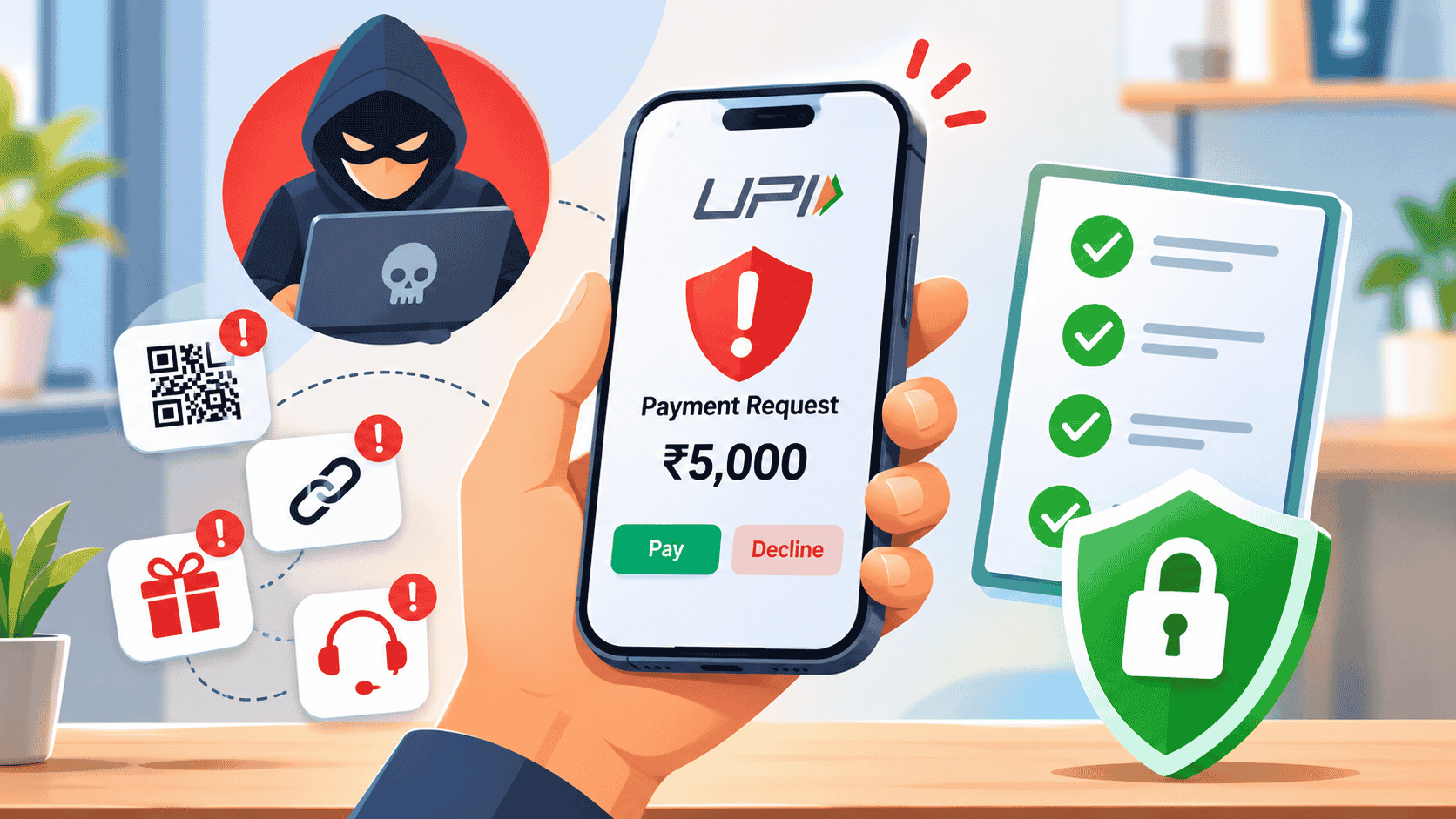
Making payments through UPI has become part of everyday life in India. Whether you’re paying at a grocery store, splitting a restaurant bill, shopping online, or sending money to a friend, a quick scan or a few taps are usually enough to complete a transaction.
But as digital payments become more common, scammers are also finding new ways to trick users. From fake payment screenshots and cashback links to fraudulent QR codes and fake customer care numbers, even a small mistake can put your money at risk.
The biggest problem? Many scams look like ordinary payment requests.
Here are 10 common UPI payment mistakes you should avoid to keep your bank account safer.
1. Entering Your UPI PIN to Receive Money
This is one of the most common tricks used by fraudsters.
Someone may tell you that they are sending you money and ask you to enter your UPI PIN to receive it. They might even pretend to be a customer, buyer, or someone returning money.
But remember: you do not need to enter your UPI PIN to receive money.
Your UPI PIN is used to authorise payments from your account. If an app asks you to enter it to approve a payment, check the details carefully before proceeding.
2. Scanning Unknown QR Codes
QR codes make payments convenient, but scanning an unfamiliar code without checking the details can be risky.
Scammers may send QR codes through WhatsApp, SMS, social media, or online marketplaces, claiming that scanning them will help you receive cashback, refunds, or payments.
Before authorising anything, check the recipient’s name and transaction details. Never enter your PIN just because someone tells you that a QR code is required to receive money.
3. Trusting Fake Payment Screenshots
Imagine selling an old phone online. A buyer sends you a screenshot showing that the payment has been completed and asks you to hand over the product.
But when you check your bank account, the money has not arrived.
Fraudsters sometimes use edited screenshots or fake payment confirmations to convince sellers that they have transferred money.
What should you do?
- Check your actual bank balance or transaction history.
- Never rely only on screenshots.
- Confirm that the payment has been credited before handing over goods.
4. Clicking on Fake Cashback and Reward Links
Who doesn’t like cashback or rewards?
Scammers take advantage of this by sending messages promising free money, shopping rewards, or special UPI offers.
These messages may contain links that lead to fake websites designed to collect personal or banking information.
Be careful with messages such as:
- Claim your ₹500 cashback now.
- Your UPI reward is about to expire.
- Click here to activate your payment bonus.
- Complete your KYC to receive a reward.
Avoid clicking suspicious links or entering your banking details on unfamiliar websites.
5. Calling Customer Care Numbers Found on Google Without Verification
This is another mistake that can lead to financial loss.
When a UPI transaction fails, people often search online for customer support numbers. Fraudsters may publish fake customer care numbers on websites, advertisements, or online listings.
If you contact one of these numbers, the person may pretend to be a bank or payment app representative and ask for sensitive information.
Always use the official website or the support section inside your banking or UPI application. Never share your UPI PIN, OTP, or passwords with someone claiming to be customer support.
6. Approving Unknown Collect Requests
A collect request allows someone to request money from your UPI account.
For example, a person might send you a payment request and claim that approving it will help you receive a refund or complete a sale.
However, approving the request and entering your UPI PIN may authorise money to be transferred from your account.
Before approving any collect request, check:
- Who sent the request?
- What amount is being requested?
- Why are they asking you to approve it?
- Are you actually expecting to make this payment?
If you don’t recognise the request, decline it.
7. Sharing Your Screen During a Payment
Some fraudsters pretend to be technical support executives and ask users to install screen-sharing or remote-access applications.
They may claim that these apps are needed to fix a failed payment, complete verification, or process a refund.
But sharing your screen can expose sensitive information, notifications, and payment activity.
Never install unknown applications or allow strangers to control your device to resolve a payment issue.
8. Ignoring the Recipient’s Name Before Paying
A quick payment can sometimes become an expensive mistake.
You might scan a QR code at a shop, select a contact, or enter a UPI ID without checking the recipient’s details.
If the wrong person receives your money, getting it back may be difficult.
Before entering your UPI PIN, always verify:
- Recipient’s name.
- UPI ID or payment address.
- Transaction amount.
- Payment purpose.
Taking a few extra seconds can prevent unnecessary trouble.
9. Falling for Urgent Payment Messages
Scammers often create panic to make people act without thinking.
You may receive messages claiming that your bank account will be blocked, your KYC will expire, or your payment access will be suspended unless you complete an urgent transaction.
Some fraudsters may even pretend to be bank employees or government officials.
Do not let urgency push you into clicking unknown links or sharing confidential information. Contact your bank through its verified communication channels if you receive a suspicious message.
10. Ignoring Bank Alerts and Transaction History
Many people check their UPI transaction only when they make a payment. They rarely review their bank alerts or transaction history.
This can make it harder to notice unfamiliar transactions quickly.
Make it a habit to:
- Enable SMS and app notifications from your bank.
- Review your recent transactions regularly.
- Report unfamiliar payments immediately.
- Keep your banking applications updated.
- Use a strong screen lock on your phone.
Early detection can help you respond faster if something suspicious happens.
What Should You Do If You Lose Money in a UPI Scam?
If you notice an unauthorised transaction or realise that you have been tricked, act immediately.
Follow these steps:
- Call 1930: Contact India’s National Cyber Crime Helpline as soon as possible to report financial fraud.
- File an online complaint: Visit cybercrime.gov.in and submit your complaint.
- Inform your bank: Contact your bank through its official customer support channel and report the transaction.
- Raise a UPI complaint: Use the complaint or support section of your payment application.
- Save the evidence: Keep transaction IDs, screenshots, messages, phone numbers, and other relevant details.
Reporting quickly is important because it may help authorities and banks take timely action. However, recovery of the money is not guaranteed.
Quick UPI Safety Checklist
Before making your next digital payment, remember these simple rules:
- Never share your UPI PIN or OTP.
- You don’t need a PIN to receive money.
- Avoid scanning unknown QR codes.
- Never trust payment screenshots alone.
- Don’t install unknown screen-sharing applications.
- Verify the recipient before authorising a transaction.
- Use official customer support channels.
- Report suspected financial fraud immediately.
UPI has made everyday payments faster and more convenient, but digital convenience also requires awareness. Many online payment scams succeed because users are rushed, confused, or convinced that they are receiving a reward or refund.
The good news is that many of these mistakes can be avoided by following a few simple safety practices.
Before your next UPI transaction, take a moment to check the recipient, understand the payment request, and never share your PIN with anyone.
Stay alert, think before you tap, and keep your money safe.
Stay tuned to Article Basket for more updates on technology, cybersecurity, digital payments, and online safety.