Imagine carrying a smartphone that fits comfortably in your pocket but opens into a much larger screen when you need it. What once seemed like an idea from science fiction is now a reality. Foldable phones are changing the way people think about smartphone design, multitasking, entertainment, and mobile productivity.
As manufacturers improve flexible displays, hinge mechanisms, and device durability, foldable smartphones are becoming an important part of the mobile technology industry. But are they the future of smartphones, or simply a premium trend?
What Are Foldable Smartphones?
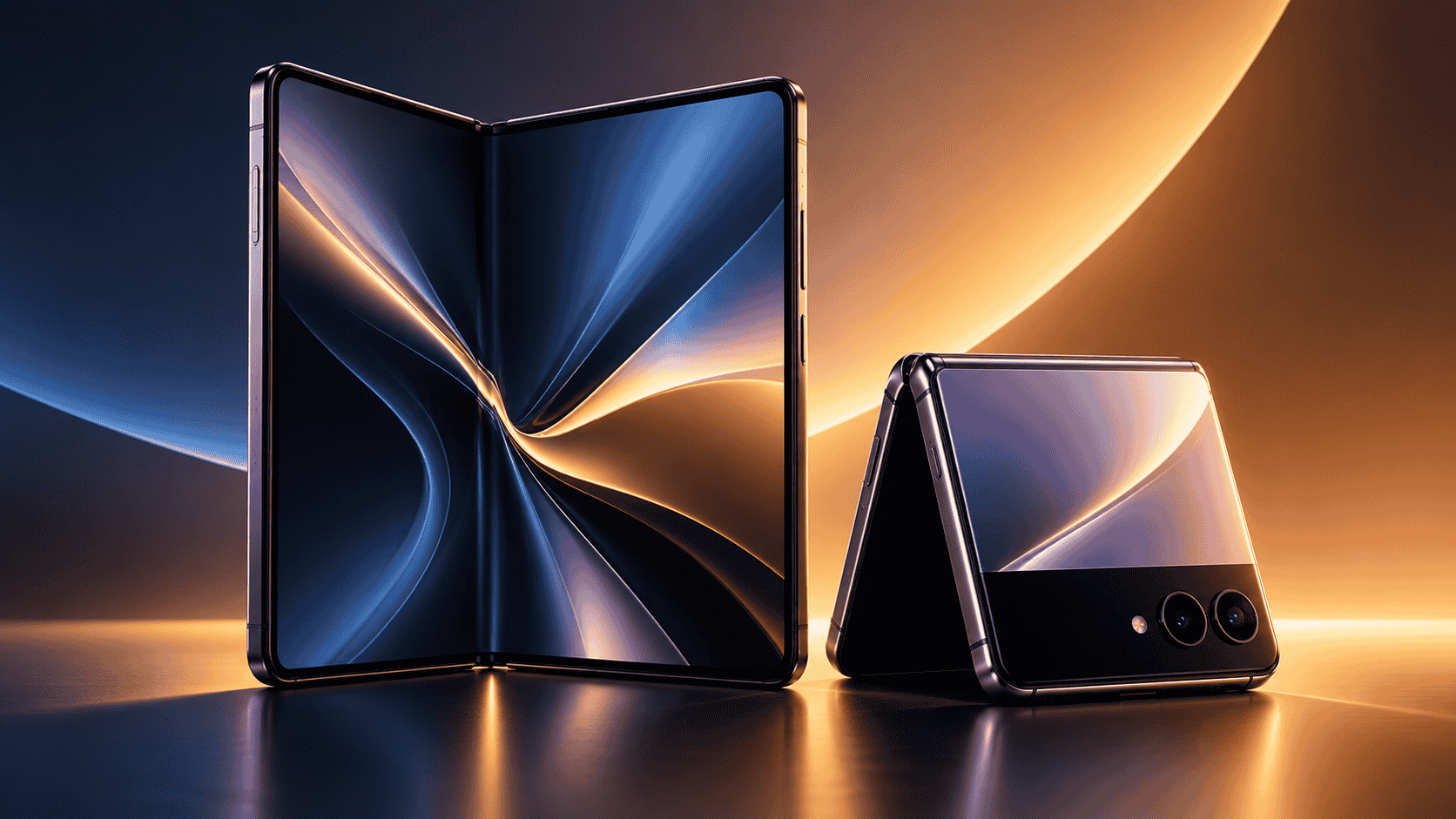
Foldable smartphones are mobile devices with flexible displays that allow the phone to fold into a smaller form or open into a larger screen. Unlike traditional smartphones, which have a fixed display, these devices can change their shape depending on how they are used.
There are two main types:
- Book-style foldable phones: These open like a book to reveal a larger, tablet-like display, making them useful for multitasking, reading, and watching videos.
- Flip-style foldable phones: These fold vertically into a compact shape, making them easier to carry while retaining the functionality of a regular smartphone.
Both designs aim to make mobile devices more adaptable to different everyday needs.
How Does Foldable Phone Technology Work?
The technology behind foldable phones is more complex than simply adding a hinge to a screen.
Most modern foldable devices use flexible OLED display technology, supported by carefully engineered layers and a hinge mechanism that guides the screen as it opens and closes. Specially designed materials help the display bend repeatedly while maintaining image quality.
Manufacturers must also coordinate the display, hinge, frame, battery, and internal components to make the device thin enough to carry comfortably.
Recent engineering developments have focused on reducing visible creases, improving durability, and making foldable devices lighter. These improvements are helping manufacturers address some of the limitations that affected early foldable phones.
Why Are Foldable Phones Becoming Popular?
1. Bigger Screens Without Carrying a Tablet
One of the biggest advantages of a book-style foldable phone is its larger internal display. Users can read documents, view presentations, watch videos, and browse websites on a screen that offers more space than a conventional smartphone.
For professionals and students, this can make certain tasks more convenient without requiring a separate tablet.
2. Better Multitasking
Foldable phones can make it easier to work with multiple applications. Users may be able to view a document while taking notes, attend a video meeting while checking messages, or compare information across two applications.
The experience depends on the phone’s software and the applications being used, but a larger display creates more room for productive workflows.
3. Compact and Portable Designs
Flip-style phones offer a different advantage. They fold into a smaller shape, making them easier to store in a pocket or small bag.
Their cover screens can also allow users to check notifications, control music, or take quick photos without fully opening the device.
4. New Ways to Take Photos and Videos
Foldable phones can be positioned at different angles, allowing users to take hands-free photos, record videos, and make video calls without always needing a separate stand.
Some models also let users preview photos on the outer screen while using the main camera, offering additional flexibility for photography.
The Challenges Foldable Phones Still Face
Despite their advantages, foldable smartphones are not perfect.
High prices: Foldable devices generally cost more than many conventional smartphones because of their specialised displays, hinges, and complex construction.
Screen durability: Flexible displays require more careful handling than traditional rigid screens. Pressure, sharp objects, and damage to the protective screen layer can create problems.
The visible crease: A fold line may remain visible in the centre of the display, although newer designs are working to reduce its appearance.
Battery and weight: Larger screens can consume more power, while fitting two display areas, a hinge, and batteries into a compact device creates engineering challenges.
Repair costs: Specialised components and complex construction can make repairs expensive. Buyers should check warranty coverage and screen-repair terms before purchasing.
Improvements in materials and design are helping address these concerns, but buyers should still compare individual models rather than assume every foldable offers the same durability or protection.
Are Foldable Phones Worth Buying?
The answer depends on how you use your smartphone.
A book-style foldable may be suitable for people who regularly read documents, multitask, watch videos, or want a larger screen without carrying another device. A flip-style phone may appeal to users who prioritise portability and compact design.
However, someone who mainly uses a phone for calls, messaging, social media, and casual photography may find that a conventional smartphone offers better value for money.
Before buying a foldable phone, consider its battery life, camera quality, durability rating, repair costs, software support, and price. It is also worth trying the device in person to see whether the hinge, crease, and overall size suit your preferences.
What Does the Future Hold for Foldable Smartphones?
The future of foldable phones will depend on whether manufacturers can make them more affordable, durable, lightweight, and practical for everyday use.
Advances in flexible display materials, hinge engineering, battery design, and mobile software could make future devices more useful and reliable. Larger displays may also create new opportunities for mobile gaming, productivity, entertainment, and features powered by artificial intelligence.
Nevertheless, foldable phones do not necessarily mean traditional smartphones will disappear. Both designs may continue to serve different audiences, with buyers choosing between affordability, simplicity, portability, and screen size.
The smartphone revolution is no longer just about faster processors, better cameras, or sharper displays. It is also about rethinking the physical design of mobile devices.
Foldable phones demonstrate how a familiar technology can evolve to offer new ways to communicate, work, and enjoy digital content. Although high prices and durability concerns remain, ongoing improvements are making this category increasingly interesting.
Whether foldable phones eventually become mainstream or remain a premium option, they are already expanding the possibilities of mobile technology.
Stay tuned to Article Basket for more updates on the latest technology trends, smartphone innovations, and digital developments.