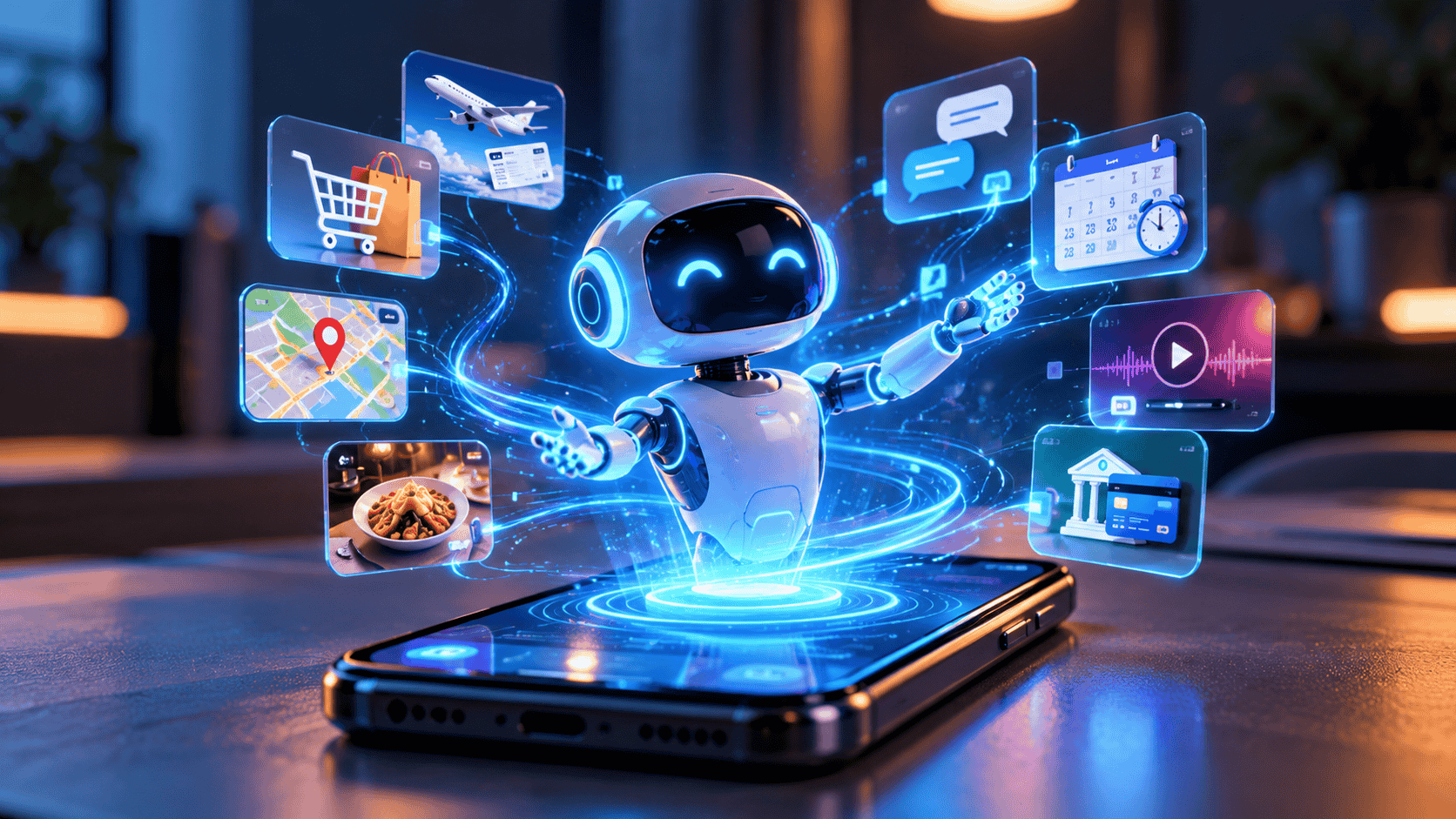
Imagine booking a cab, ordering dinner, checking your calendar, and sending a message without opening four different apps. You simply tell your phone what you want, and an AI assistant handles the steps for you.
Sounds like the future? That future is already beginning to take shape.
Smartphones have traditionally revolved around apps. Whether you want to shop online, transfer money, book tickets, or watch videos, you usually open a specific application and navigate through menus. But artificial intelligence is starting to change this habit, raising an interesting question: could AI eventually replace the way we use apps today?
Why AI Could Change the Way We Use Smartphones
For years, smartphone innovation has focused on better cameras, faster processors, bigger screens, and new applications. Now, technology companies are exploring a different approach: letting users describe what they want in natural language instead of performing every step themselves.
For example, imagine saying, “Find a restaurant near me, check the reviews, and help me book a table for two tonight.”
Instead of making you switch between maps, search results, restaurant websites, and booking platforms, an AI assistant could coordinate parts of that process through supported services.
Google has been developing ways for AI agents to interact with Android apps and automate certain multistep tasks. Apple is also integrating AI capabilities with app actions through its Apple Intelligence ecosystem. These developments suggest that AI may increasingly become the interface through which people access digital services.
What Happens to the Apps We Use Every Day?
The biggest change may not be the disappearance of apps, but the way we interact with them.
Shopping: Instead of browsing dozens of products, you might ask an AI assistant to compare prices, check specifications, and find an option that fits your budget.
Travel: An AI assistant could help coordinate flights, accommodation, maps, and calendar events using compatible services.
Communication: AI could help summarise conversations, draft replies, organise messages, and create reminders based on information you provide.
Entertainment: Rather than scrolling through multiple platforms, you might describe the music, videos, or content you want and let an assistant find suitable options.
These examples illustrate the potential direction of the technology. The actual capabilities depend on the device, software, supported apps, permissions, and availability of integrations.
Why Would Tech Companies Want This Change?
AI-powered interactions could make smartphones easier to use, especially for people who find complicated menus or repetitive tasks frustrating.
For technology companies, the shift could also change competition. Today, many businesses focus on getting users to open their apps regularly. In an AI-driven environment, users may increasingly rely on an assistant to discover services and complete tasks.
That means businesses could need to make their products accessible to AI systems, not just design attractive app interfaces. Google’s Android developer platform is already exploring ways for applications to expose their functions to AI agents.
However, apps still offer important advantages. They provide detailed interfaces, visual controls, specialised features, and direct access to services. Many tasks, especially those involving creative work, gaming, banking, or complex settings, may continue to work best inside dedicated applications.
The Biggest Challenge: Privacy and Trust
Giving AI more control over a smartphone also introduces new risks.
An assistant may need access to personal information, messages, location data, or other applications to complete certain tasks. If it misunderstands an instruction or acts on incorrect information, the consequences could range from an inconvenient booking to an unwanted purchase.
Users will need clear permission controls, transparent activity logs, and opportunities to review important actions before they are completed.
Security is particularly important when tasks involve payments, personal documents, or confidential conversations. Convenience should never mean giving an AI unlimited access to everything on a device.
Will Smartphones Eventually Become One Big AI Assistant?
Probably not overnight. The transition will depend on how reliable AI agents become, whether developers support them, and how comfortably users trust them with everyday tasks.
A more realistic future is a combination of traditional apps and AI assistants. Apps may continue operating in the background while AI becomes a simpler way to access their features.
Instead of asking which app to open, people may increasingly focus on what they want to accomplish.
The smartphone itself is unlikely to disappear anytime soon. But the familiar grid of app icons may become less central to the experience.
The next big smartphone revolution might not be a better screen or a faster processor. It might be a phone that understands what you want to do—and helps you do it.
Stay tuned to Article Basket for more updates on artificial intelligence, smartphones, and the technology shaping our digital future.