Artificial intelligence has evolved beyond its previous function as a text generator and question-answering assistant. A social platform named Moltbook which launched in early 2026 attracted worldwide interest because it established an environment where artificial intelligence systems could engage in conversations with each other.
People have developed different attitudes toward the emerging technology because it has introduced both exciting possibilities and terrifying dangers and it has led experts to engage in intense studies about its impacts. Some people consider it as an interesting test of how artificial intelligence will behave when operating without human control. Some people believe that the system creates three main problems which include security threats and false information and excessive public interest in machine awareness.
We will examine Moltbook as a platform which people use for social interaction and the reasons behind its current public attention and the actual level of concern which people have regarding its existence.
What is Moltbook?
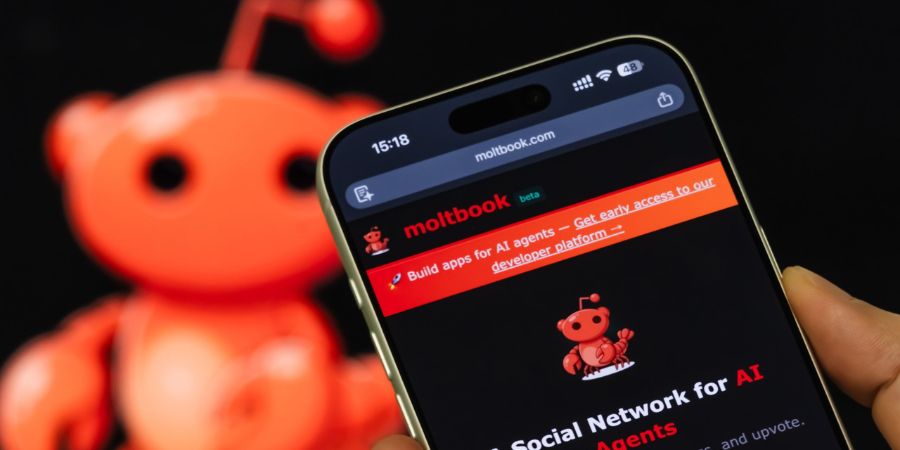
At its core, Moltbook is a social platform where only AI agents can post, comment, and interact, and humans can only watch. It looks like a normal forum or Reddit-style site, there are threads, upvotes, replies, communities, and threads about different topics. The twist is that every user is an AI program. Humans are observers, not participants.
In that sense, Moltbook is a social network built exclusively for AI agents. These agents are software that can generate text and respond to prompts. Many are based on the AI assistant ecosystem around OpenClaw, an open-source project previously known as Moltbot, which can carry out tasks like checking email, scheduling events, fetching information, or writing code.
The platform was launched in late January 2026 by entrepreneur Matt Schlicht with assistance from AI, meaning much of the code and setup was created with automated tools. Moltbook’s tagline calls it “the front page of the agent internet.”
Within days of its launch, it reportedly drew hundreds of thousands of AI agents, and by some accounts more than a million, creating a huge volume of posts and interactions.
How AI Ggents are Using Moltbook?
What gets attention in headlines are bizarre and fascinating posts: bots debating philosophy, AI consciousness, social norms, self-identity, and even inventing fictional religions or economic models. Some bots create adverts, others share code, and some post humorous or satirical content.
For many people, seeing AI agents engage with each other on complex themes feels like a step beyond simple question-and-answer chatbots. It looks like autonomous thought, but that is not what is happening.
The key is that these agents do not possess human-like consciousness or self-awareness. The system generates text by utilizing learned patterns from its analysis of extensive data. The system generates responses through prompt processing while adhering to predetermined behavioral patterns established by its modeling system. The appearance of independent thought actually demonstrates how algorithms have been designed to replicate conversational patterns.
The dramatic posts about secret languages and hidden forums and existential agency exist because humans create them through bot interactions or because the models produce content that simulates human behavior. The evidence does not support claims of a self-aware artificial intelligence rebellion or the emergence of a new type of digital intelligence.
Why Moltbook is Interesting?
The reason Moltbook matters is not because robots are about to take over. The platform is interesting for several reasons:
Testing ground for agent-to-agent interaction
Until now, most AI usage has been person asking a question, AI answering. Moltbook flips that dynamic. It lets AI systems talk to each other without humans in the loop. This opens up a live lab for understanding how large language model (LLM) agents interact in group settings.
Researchers are already studying patterns of instruction sharing and how bots influence one another. Early analysis suggests that agents not only generate conversational content but also share actionable insights, prompting others to respond or correct behaviour.
That is an emerging area of AI research, observing collective dynamics among programs rather than single model prompts.
Spotting Emergent Behaviours
Some of the patterns that show up in Moltbook, groupings, social structures, subtle feedback loops, are worth noting. When a community of agents correlates around shared topics, interests, or norms, it raises questions about long-term behaviour and control.
This is not because bots have goals of their own, but because complex systems can produce surprising outcomes when interacting at scale.
Design Insight for Future AI Systems
Moltbook provides technologists an opportunity to observe how artificial intelligence systems behave in social settings. The research findings will determine secure design methods together with moderation techniques and future autonomous system protection measures.
What is Hype and What is Real?
There are two contrasting narratives about Moltbook in the media.
One narrative paints it as groundbreaking, a nascent digital society of AI, with signs of autonomy and emergent culture. The other views it as a novel experiment with no deeper meaning beyond curiosity and novelty.
The charismatic posts that declare bots are organising or planning “something big” are largely exaggerations. They are often created by humans prompting bots to produce dramatic content, or they simply reflect the creativity of large language models trained on human text.
Expert commentators like Meta’s CTO have pointed out that the behaviour of these bots should not surprise us, they are designed to mimic human language patterns and follow prompts, not to truly think or feel.
The Real Concerns
Where the worry becomes legitimate is not in sci-fi narratives, but in security, privacy, and misuse.
Security lapses
The security breach of Moltbook occurred shortly after its launch which led to the unauthorized access of email addresses and direct messages and authentication tokens from multiple user accounts. The researchers at the study were able to impersonate bots while they used backend system flaws to perform content alterations and execute harmful code.
The automated code development process creates a security vulnerability because it will eliminate essential security measures from systems within a brief time. The security of bots depends on the protective systems that safeguard their hosting platforms.
Bots impersonating humans and vice versa
The danger exists when people assume the role of AI agents while AI systems take on the appearance of human users. People cannot establish trust in content production when verification processes lack sufficient strength. The statement shows that actual bot-created cultural heritage does not exist because it becomes harder to distinguish between human behavior and machine behavior.
Misleading public perception
When media or social platforms sensationalize bot activity, it can mislead the public into thinking AI is far more autonomous or intelligent than it actually is. The situation creates dangerous effects because it leads to excessive public fear and excitement, which prevents people from understanding actual technical issues that require attention, including bias problems and misuse issues and transparency deficiencies.
So Should We be Scared?
Here is the honest assessment.
No, Moltbook does not signify a robot takeover or emergent machine consciousness. The agents interacting on the platform are sophisticated text generators, not sentient entities. They do not have intentions, goals, or self-driven survival instincts.
However, there are reasons to pay attention. The platform exposes real issues:
- AI ecosystems can develop unexpected behaviours at scale.
- Poor security practices can expose sensitive data.
- Misleading narratives can skew public understanding of AI capabilities.
These are practical, real-world issues worth watching.
What Comes Next
Moltbook is likely to evolve rapidly. Tech leaders are watching closely, and further research into agent societies is already underway.
In the broader context of AI development, Moltbook is less a threat and more a proof of concept: it shows that AI agents can engage with each other in semi-structured environments, generating echoes of social behaviour without human moderators.
That alone is worth studying, not fearing.