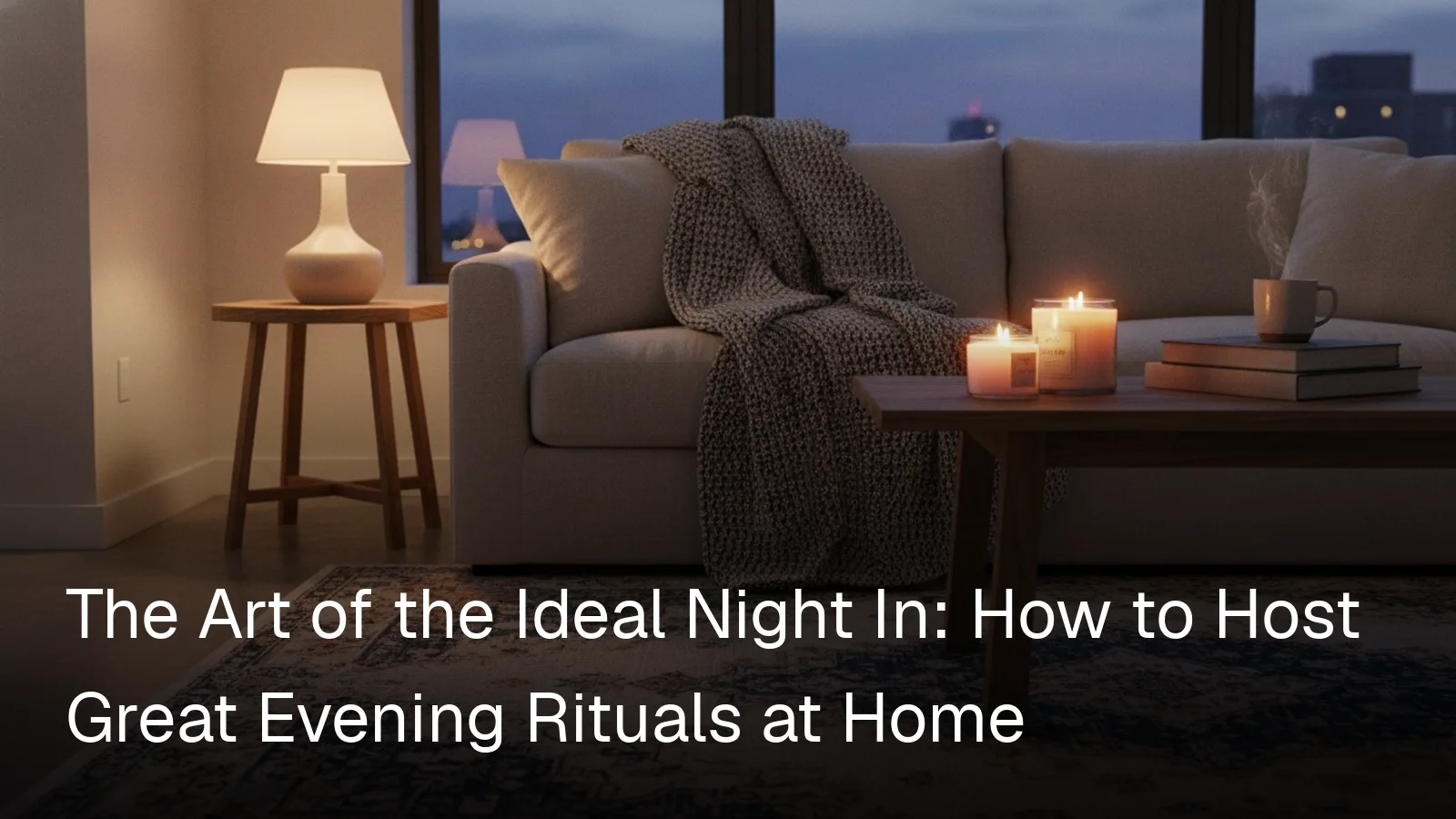
For decades, an exciting weekend social calendar was defined by reservations at crowded restaurants, long lines outside nightlife venues, and high tab totals. Today, a quieter shift is redefining how people spend their free time. Staying home trends show a growing preference for spending leisure hours in the comfort of one’s own living room, where relaxing does not require expensive parking, dress codes, or heavy crowds.
According to research from CivicScience, 74% of Americans always or often prefer spending their free time at home. That preference reaches 89% among Baby Boomers and 62% among adults aged 18 to 29. Furthermore, a report by Time Out revealed that 91% of its U.S. community say spending time at home helps them recharge socially. Rather than completely cutting out social connections, people are turning their homes into intentional gathering places. In fact, 68% of respondents in that report regularly host people at home—a figure that rises to 73% among younger Millennials and Gen Z, and reaches 90% for those living with roommates.
Whether you want to gather friends for a relaxed dinner or curate a soothing evening routine ideas list for yourself, elevating your nights in does not require a large budget. Here is how to embrace home-focused living with practical strategies for hosting at home and personal relaxation.
Understanding staying home trends and the couch economy
The cultural move toward spending evenings indoors has created what financial analysts call the “couch economy.” Data from Visa shows that the share of U.S. payment volume occurring online and in-app grew from 48% in 2019 to 58% in 2026. Consumers are increasingly shifting their discretionary spending away from outer-city entertainment, like concerts or movie theaters, and toward home delivery, streaming platforms, and cozy living upgrades.
This shift reflects clear priorities in how people want to spend their time and money. When CivicScience surveyed Americans about their ideal free evening, 33% selected watching TV or movies at home, while 22% preferred relaxing or pursuing a home hobby. In contrast, only 11% favored going out with friends or family, and just 9% preferred dining out at a restaurant.
This shift extends internationally as well. A study conducted by Sharps across 3,005 people in 15 countries found that the average person spends 6 hours and 58 minutes at home on a typical weekday and 8 hours and 5 minutes on a weekend day, excluding time spent sleeping or working. People are building deeper psychological connections to their living environments, viewing the home as a essential harbor for stability, privacy, and personal expression.
Thoughtful hosting at home on a budget
Hosting friends at home does not need to mimic an expensive restaurant experience to feel special. Creating a memorable gathering is more about intentional atmosphere and warmth than complex menu planning or costly decor.
Data from Time Out highlights that food and drinks are the single most effective element for making an evening at home feel like an event, cited by 55% of respondents. In addition, 83% of hosts report feeling proud of the atmosphere they curate. You can achieve a great hosting setup without overspending by focusing on targeted touches:
- Set up a welcoming ambiance: Ambient lighting and subtle home fragrances instantly change the mood of a room. CivicScience research reveals that furniture and decor top the list of cozy-home purchases at 21%, followed by food and drinks at 18%, and candles or home fragrances at 17%. Interestingly, 23% of stressed respondents prioritized candles and home scents, compared to 14% of less-stressed individuals, illustrating how sensory elements foster relaxation.
- Design interactive food experiences: Instead of taking on the cost and effort of a multi-course dinner alone, host a potluck themed around a specific region, or organize a cookbook night where guests bring dishes based on shared recipes.
- Focus on structured home events: Simple themes give an evening focus. Consider hosting a board game tournament, a movie watch party, or a home wine-tasting night where guests bring their favorite affordable bottles.
By focusing on shared activities and warm lighting rather than extravagant spending, budget entertaining becomes both manageable and rewarding for hosts and guests alike.
Low-stimulation evening routine ideas for restoration
Not every night in needs to be a social event. For many, spending an evening indoors is an essential way to recover from the demands of work and digital overload.
Cooking at home has emerged as a major therapeutic practice for weekend unwinding. A study of 2,000 adults commissioned by Hotpoint found that 73% look forward to spending their weekends at home, with 56% doing so more now than in previous years. Furthermore, 60% of adults reported swapping nights out in bars or clubs for evening cooking at home.
Professor Fuschia Sirois, a specialist in social and health psychology at Durham University, notes that work recovery relies on four key psychological factors: switching off, relaxing, learning something new, and feeling in control of time. Cooking a weekend meal offers all four elements in a way a night out rarely can. In the Hotpoint study, 32% of respondents chose weekend cooking specifically because it feels more relaxing than weekday meal prep. Among those spending longer in the kitchen, 63% cited having more time to enjoy it, 42% appreciated not rushing, 40% enjoyed testing complex new recipes, 22% felt it helped them slow down and stay present, and 18% used it to disconnect from screen distractions.
To build a soothing personal evening routine, integrate low-stimulation habits into your nightly schedule:
- Engage in screen-free leisure: Spend 30 to 60 minutes preparing a meal, reading a physical book, or working on a hands-on hobby.
- Incorporate low-stimulation downtime: Health guidance from medical reference site Zocvi highlights that 10 to 15 minutes of daily low-stimulation time—such as sitting quietly without a screen, light stretching, or taking a brief walk—is one of five foundational daily habits that support long-term wellness and energy levels.
- Protect sleep schedules: Pair your quiet evening rituals with consistent sleep timing to ensure your body fully resets before the next day.
Smart spending tips for the homebody lifestyle
While opting to stay home is often seen as a way to save money, taking part in the modern couch economy can quietly add up if not monitored. Order-in meals, multiple streaming platforms, and digital rentals can quickly match the cost of a night out. For instance, ordering takeout for two paired with a new-release digital film rental can easily reach $80.
To keep your living room leisure genuinely budget-friendly, consider these practical financial strategies:
- Audit digital subscriptions: Review your streaming services monthly and temporarily pause channels you are not actively watching.
- Prioritize grocery cooking over food delivery apps: Save takeout for special treats, and rely on home cooking for routine weekend nights in.
- Invest in durable home comfort: Shift discretionary spending toward long-lasting items that improve daily home comfort—like quality bedding, soft lighting, or reusable tableware—rather than short-term delivery fees.
When managed deliberately, staying in provides the dual benefit of psychological restoration and financial control.
Frequently asked questions
Why is staying home becoming more popular than going out?
Many people are seeking to slow down, reduce social exhaustion, and avoid the high costs associated with traditional nightlife, such as steep markups, tipping, and transportation fees. Modern home entertainment options and delivery services also make staying inside far more comfortable and convenient than in the past.
Does staying home automatically save money?
Not necessarily. While staying in eliminates expenses like valet parking or restaurant markups, spending on frequent food delivery apps, premium streaming subscriptions, and online shopping can accumulate quickly. Intentionally planning home meals and managing subscriptions is key to keeping a night in cost-effective.
What are simple ways to make a night at home feel special?
Small atmospheric changes make a large difference. Soft lighting, scented candles, curated music playlists, and cooking a meal from scratch can transform an ordinary evening into a memorable event without requiring significant expense.
Embracing the cozy evening ahead
Redefining how you spend your leisure time at home allows you to build deeper social bonds and establish practical habits for self-care. By combining budget-friendly hosting strategies with peaceful, screen-free evening rituals, you can transform ordinary nights in into deeply satisfying experiences. Focus on low-stress gatherings, sensory comfort, and mindful unwinding to make your living space the ultimate sanctuary.
Sources
- Americans Discover Joy Of Staying Home, Leaving Advertisers To Fight Over The Couch (yahoo.com)
- Lifestyle & Wellness Questions and Answers | Zocvi (zocvi.com)
- Time Out launches new “Time In” report revealing how Americans are redefining the night out (timeout.com)
- The ‘couch economy’ is booming. But is staying home actually saving you money? (finance.yahoo.com)
- Brits ditch nights out for home cooking (nationalworld.com)
- Which Countries Love Staying at Home Most? | Sharps (sharps.co.uk)
Written by
Karan Agrawal
Head Strategist