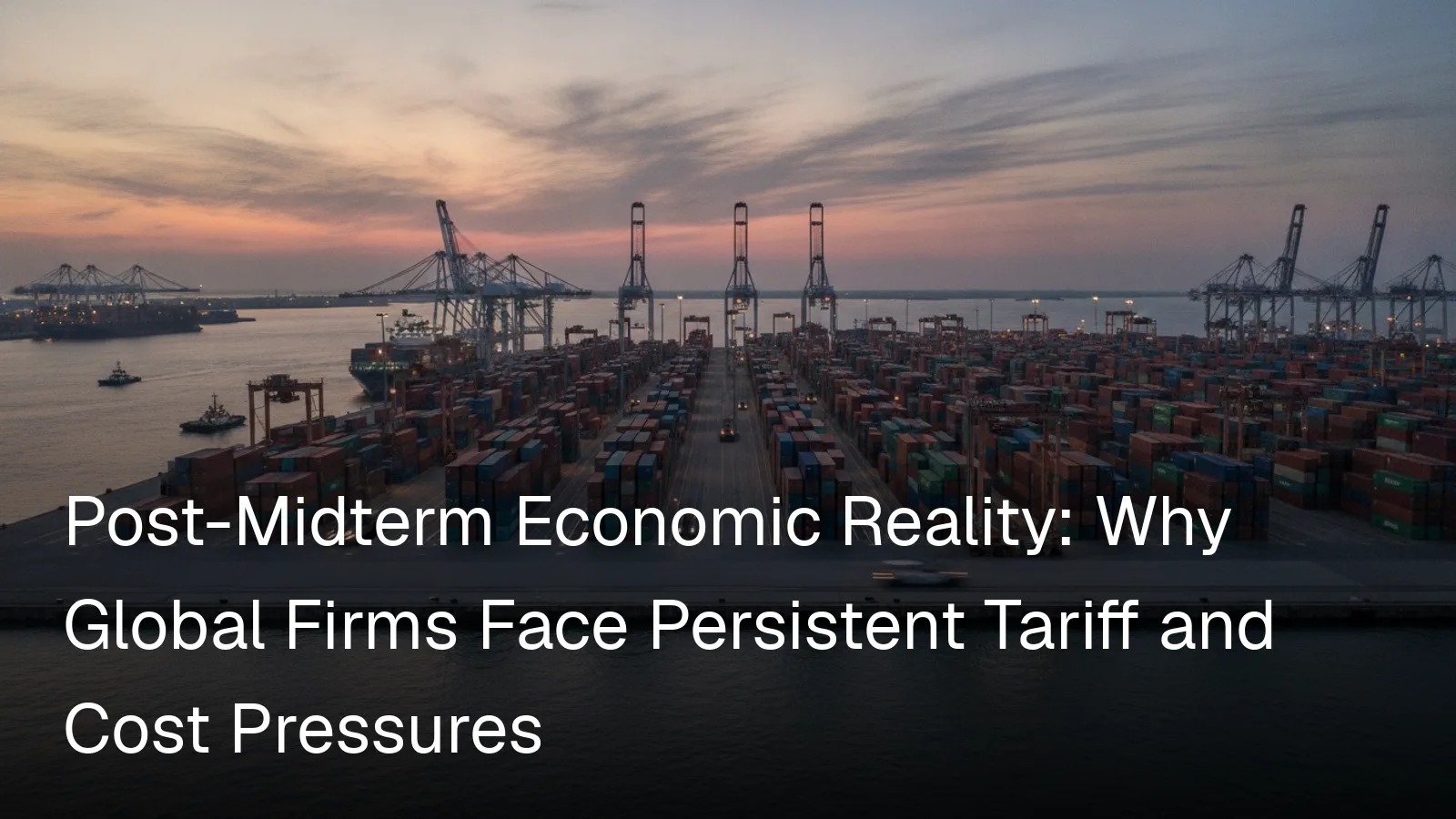
The 2026 U.S. midterm elections resulted in a significant shift in legislative control, with Democrats securing both the Senate and the House of Representatives. While financial markets initially reacted with a rally in stocks and government bonds, the sentiment among global executives remains grounded in a difficult operational reality. For leadership teams, the political transition does not immediately resolve the global corporate cost pressures 2026 has brought to the forefront.
International firms continue to face a combination of high energy prices, expensive raw materials, and a consumer base that has become increasingly cautious. Although the prospect of political stability in the U.S. is welcomed by some, the structural frictions within the global economy—including supply chain bottlenecks and persistent inflation—suggest that the road ahead for corporate margins remains steep.
Persistent Structural Friction in Global Operations
Despite the change in congressional leadership, many of the issues roiling companies worldwide remain unchanged. Executives from global manufacturers and consumer brands note that the midterm results are unlikely to alter their near-term outlook. The primary challenges continue to be the soaring costs of energy and raw materials, which have been exacerbated by ongoing conflicts, such as the war in Iran. These factors create a difficult environment for companies producing everything from food and beverages to consumer electronics and automobiles.
For many firms, the shift in power brings a hope for a more reliable economic framework. However, the immediate impact on trade policy and tariffs is still uncertain. While a Democratic-controlled Congress may increase pressure on the White House to avoid escalating trade wars, the existing tariffs on imported goods continue to weigh on operational budgets. This lack of immediate relief means that supply chain managers must continue to plan for high input costs well into the coming year.
Managing Global Corporate Cost Pressures 2026
As we move through the final quarter of the year, cost pressures are no longer limited to the energy sector. According to recent global surveys, approximately 70% of accountants reported increased operating costs in the third quarter of 2026. This widespread inflation is driven by a combination of rising energy prices, higher government bond yields, and tighter monetary policies.
Manufacturing data indicates that while factory output has remained relatively strong, supply chain bottlenecks and capacity constraints are persistent. These shortages have enabled factories to pass higher costs on to customers, leading to some of the steepest inflation rates seen in the past four years. For executives, this means that the “new normal” involves navigating an unpredictable economic backdrop where two-thirds of financial professionals expect inflation to continue rising in the short term.
Divergent Demand and Financing Constraints
There is a growing divide in how different sectors are experiencing the current economic climate. Producers of investment goods, particularly those related to artificial intelligence and defense, are seeing robust demand that is relatively price-inelastic. In contrast, consumer goods producers are struggling as households face falling affordability and become more price-conscious. This divergence requires strategy directors to be highly selective about where they allocate capital.
Furthermore, financing risks have moved to the forefront of executive concerns. Even though many economies have avoided a formal recession, elevated borrowing costs are putting pressure on companies with significant debt or long cash conversion cycles. This environment is characterized by:
- Tighter credit standards: Banks are becoming more cautious in their lending practices.
- Slower payment cycles: Companies are taking longer to settle invoices, affecting liquidity across the supply chain.
- Reduced investment activity: High interest rates are forcing firms to delay or scale back large capital projects.
Evolving Supply Chain Risks and Resilience
Supply chain risk in late 2026 has evolved beyond simple logistics delays. Executives must now manage a complex web of sanctions, export controls, and shifting regulatory requirements. Visibility across multiple tiers of the supply chain has become essential, as vulnerabilities often hide several layers deep within a supplier network.
While the U.S. midterm results may lead to more scrutiny of specific sectors—such as AI, which may face increased oversight from a Democratic Congress—the broader trend toward supply chain diversification continues. Companies are increasingly focused on identifying hidden vulnerabilities and improving operational resilience to withstand geopolitical instability, which remains a top priority for 25% of Chief Financial Officers.
Frequently Asked Questions
How did the 2026 U.S. midterms affect the stock market?
Following the news that Democrats secured control of Congress, U.S. stock markets and government bonds rallied, while the U.S. dollar fell. European shares also saw gains, particularly in the clean energy and banking sectors.
What are the primary concerns for CFOs following the election?
Chief Financial Officers remain primarily concerned with economic pressures and geopolitical instability. Despite the election results, many feel that confidence remains low by historical standards due to an unpredictable global backdrop.
Why are consumer goods companies struggling more than other sectors?
Consumer goods producers are facing a squeeze because households have become more price-sensitive due to high grocery and gas bills. Unlike the defense or AI sectors, where demand remains high regardless of price, the consumer sector is highly sensitive to falling affordability.
Strategic Takeaways for Leadership
The post-midterm landscape does not offer a quick fix for the inflationary and supply chain pressures defining 2026. Leadership teams should focus on maintaining high visibility into their multi-tier supplier networks and preparing for continued volatility in energy and raw material pricing. While the prospect of political stability provides a psychological boost to the markets, the underlying macroeconomic friction requires a disciplined approach to budgeting and a cautious outlook on consumer demand.
Sources
- US stock markets and government bonds rally while dollar falls after Democrats secure Congress – as it happened | Business | The Guardian (theguardian.com)
- US Democratic win unlikely to ease firms’ cost, tariff woes in near term, executives say By Reuters (investing.com)
- Stock Market Today: Dow Soars On Election Landslide; Building, Retail, Healthcare Areas Jump (Live Coverage) (finance.yahoo.com)
- Global economic conditions survey | ACCA (accaglobal.com)
- Global PMI signals solid factory output growth in October but price growth accelerates amid shortages | S&P Global (spglobal.com)
- Global Economic Outlook Q4 2026 (dnb.com)
Written by
Nirmal Chhajed
Head Publisher