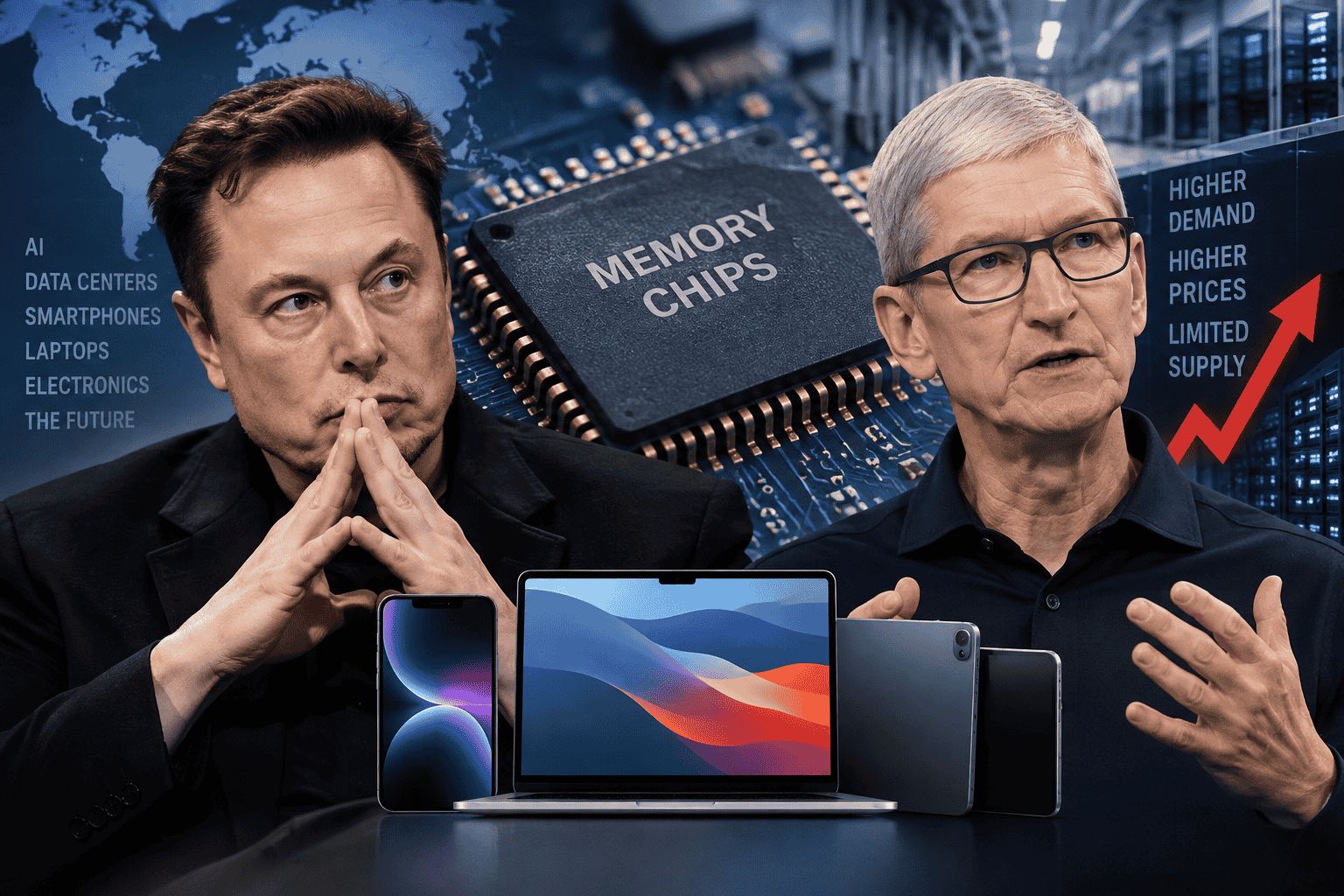
The global artificial intelligence boom is creating a new challenge for the technology industry: memory chip supply.
As companies build increasingly powerful AI data centers, demand for memory components has surged. That demand is putting pressure on supplies of DRAM, NAND and high-bandwidth memory used by AI systems as well as everyday products such as smartphones, laptops, gaming devices and automobiles.
The issue has attracted attention from major technology leaders, including Apple CEO Tim Cook and Elon Musk.
Why Are Memory Chips So Important?
Memory chips allow electronic devices and computers to store and quickly access information.
Traditional devices use memory such as DRAM and NAND storage. AI data centers also require large quantities of advanced memory, particularly high-bandwidth memory, to work alongside powerful processors.
As AI companies continue expanding their computing infrastructure, they are competing for limited memory manufacturing capacity.
That competition is contributing to higher prices and tighter supplies across the industry.
What Tim Cook Said About the Situation
Apple has already felt the impact.
In June 2026, Tim Cook told the Wall Street Journal that rising memory and storage costs had become difficult for Apple to absorb. He said price increases were unavoidable as the company dealt with significantly higher component costs.
Apple subsequently increased prices on several Macs and iPads.
During Apple’s July 2026 earnings call, Cook described the situation as a “100-year flood” on memory pricing, highlighting just how unusual the company’s experience with memory costs has been. Apple also expected memory expenses to remain elevated into the September quarter.
Elon Musk Has Also Raised Concerns
Elon Musk has also commented on the memory supply situation, as the growing AI infrastructure buildout increases demand for computing components.
His comments came amid wider industry concerns that AI infrastructure could consume a significant share of available memory production.
The issue isn’t simply about one company. It reflects a broader competition for semiconductor manufacturing capacity between AI infrastructure and traditional electronics.
What Does This Mean for Phones and Laptops?
Memory is an important component in almost every modern electronic device.
Smartphones need memory for applications and operating systems. Laptops depend on RAM and storage. Cars, servers, gaming systems and industrial equipment also use semiconductor memory.
When memory becomes more expensive or difficult to obtain, manufacturers have several options. They can absorb the additional cost, reduce margins, change product configurations or increase prices.
Smaller device manufacturers are already facing difficulties securing memory supplies. Reuters reported in September 2026 that some smartphone and laptop makers are preparing for prolonged memory shortages, with supply constraints potentially continuing through 2027 or longer.
Is AI Responsible for the Entire Shortage?
Not entirely.
AI is a major source of the recent increase in demand, but the memory market is influenced by several factors, including manufacturing capacity, production decisions, inventory levels and demand for different types of memory.
AI is particularly important because its data centers require enormous quantities of advanced computing hardware.
The result is increased competition for memory production that also serves other technology markets.
What Could Happen Next?
The memory market is still developing.
Manufacturers are investing in additional production capacity, while companies are looking for ways to secure long-term supplies. Reuters reported this week that China’s CXMT is also planning to expand into NAND flash memory as global demand remains strong and supply is constrained.
For consumers, the effects could include higher prices, different memory configurations, or fewer low-cost device options if manufacturers continue facing elevated component costs.
The bigger story is that the AI revolution isn’t only changing software. It is also changing demand across the hardware industry.
As AI data centers continue to expand, the competition for the memory chips powering both AI systems and everyday electronics could remain an important issue for the technology industry.
Stay tuned to Article Basket for more technology updates, industry trends, and interesting stories shaping the digital world.