UPI has become one of the most popular ways to make digital payments in India. From shopping and paying bills to sending money to friends, millions of transactions take place through UPI every day. However, a new change coming into effect from October 15 is set to introduce charges on certain UPI merchant transactions.
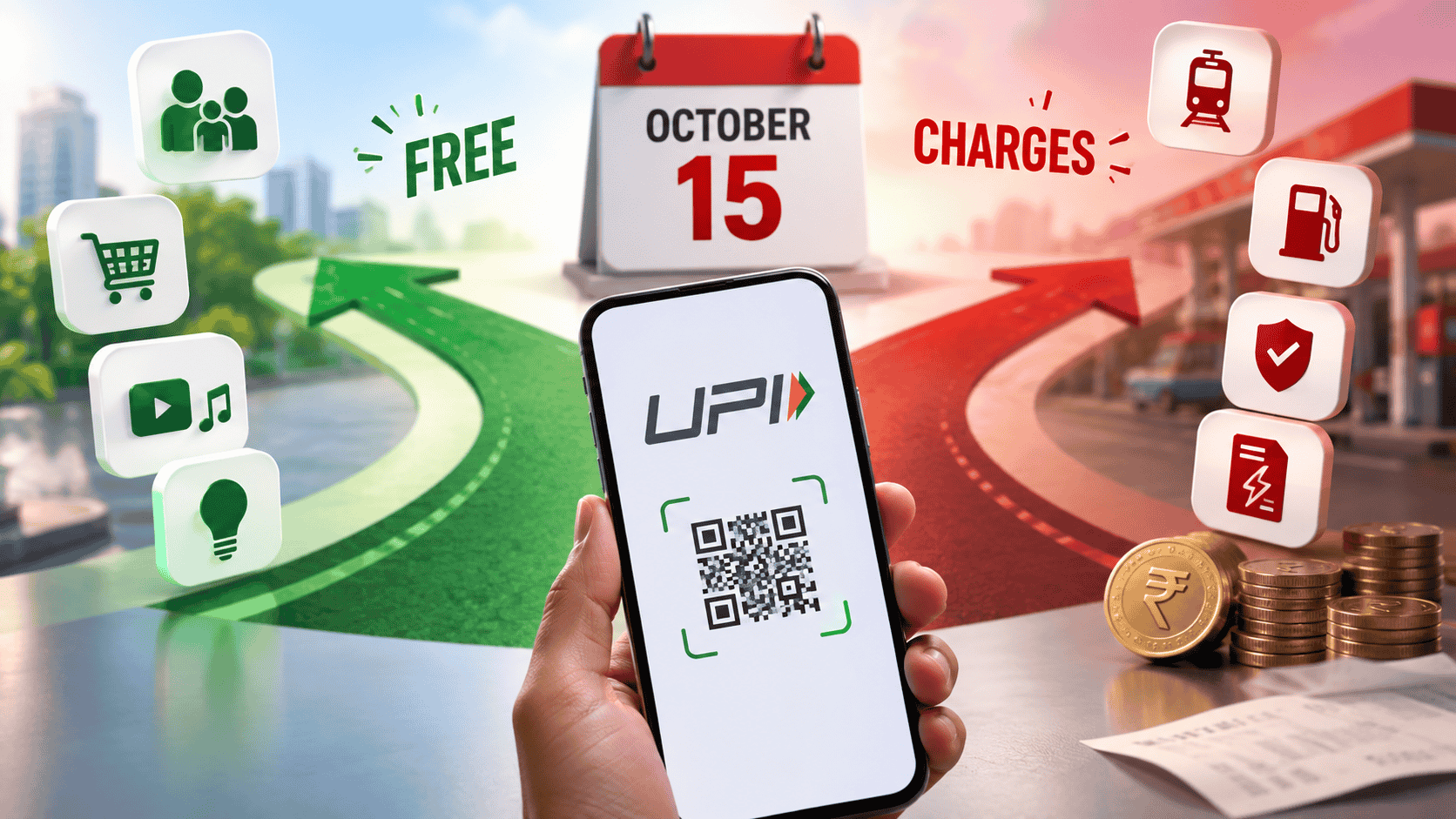
The change does not mean that all UPI payments will become chargeable. Instead, the new structure applies to specific transactions, while several common UPI payments will continue to remain free.
What Are the New UPI Charges?
Under the new structure, eligible merchant UPI payments above Rs 2,000 will attract a 0.4% Merchant Discount Rate (MDR), subject to the applicable maximum charge.
MDR is a fee associated with processing a merchant payment. It is charged on the merchant side and should not be treated as a direct transaction fee for customers.
For example, a qualifying merchant transaction of Rs 10,000 would have an MDR of Rs 40 at the 0.4% rate.
Who Will Continue to Pay Nothing?
Several UPI transactions will remain free.
Person-to-person payments: Sending money to friends or family through UPI will continue to remain free, regardless of the amount.
Payments up to Rs 2,000: Eligible merchant payments of up to Rs 2,000 will continue with zero MDR.
UPI AutoPay: Recurring UPI payments and mandates, including certain OTT subscriptions and other recurring services, will remain outside the prescribed MDR.
What About Railway and Fuel Payments?
Some categories will follow a different fee structure. Qualifying payments above Rs 2,000 for railway tickets, fuel, insurance and specified utility services will have a flat Rs 5 MDR instead of the standard 0.4% rate.
This means the applicable charge can vary depending on the type of transaction.
Why Is UPI Introducing These Charges?
UPI has operated with minimal direct charges for users for years, helping drive the rapid growth of digital payments in India. The new structure has renewed discussion around the cost of maintaining and operating payment infrastructure as transaction volumes continue to increase.
The government has also previously supported the UPI ecosystem through incentives and other measures, making the economics of digital payments an important part of the discussion.
What Does This Mean for Users?
For everyday UPI users, the impact may be limited. Sending money to individuals and making eligible payments up to Rs 2,000 will continue to remain free.
The main change concerns eligible higher-value merchant transactions, where MDR will apply from October 15.
So, UPI is not becoming a paid service for everyone. Instead, the new rules create different charges depending on the transaction amount and category.
Stay tuned to Article Basket for more updates on technology, business, finance and the latest developments shaping everyday digital life.