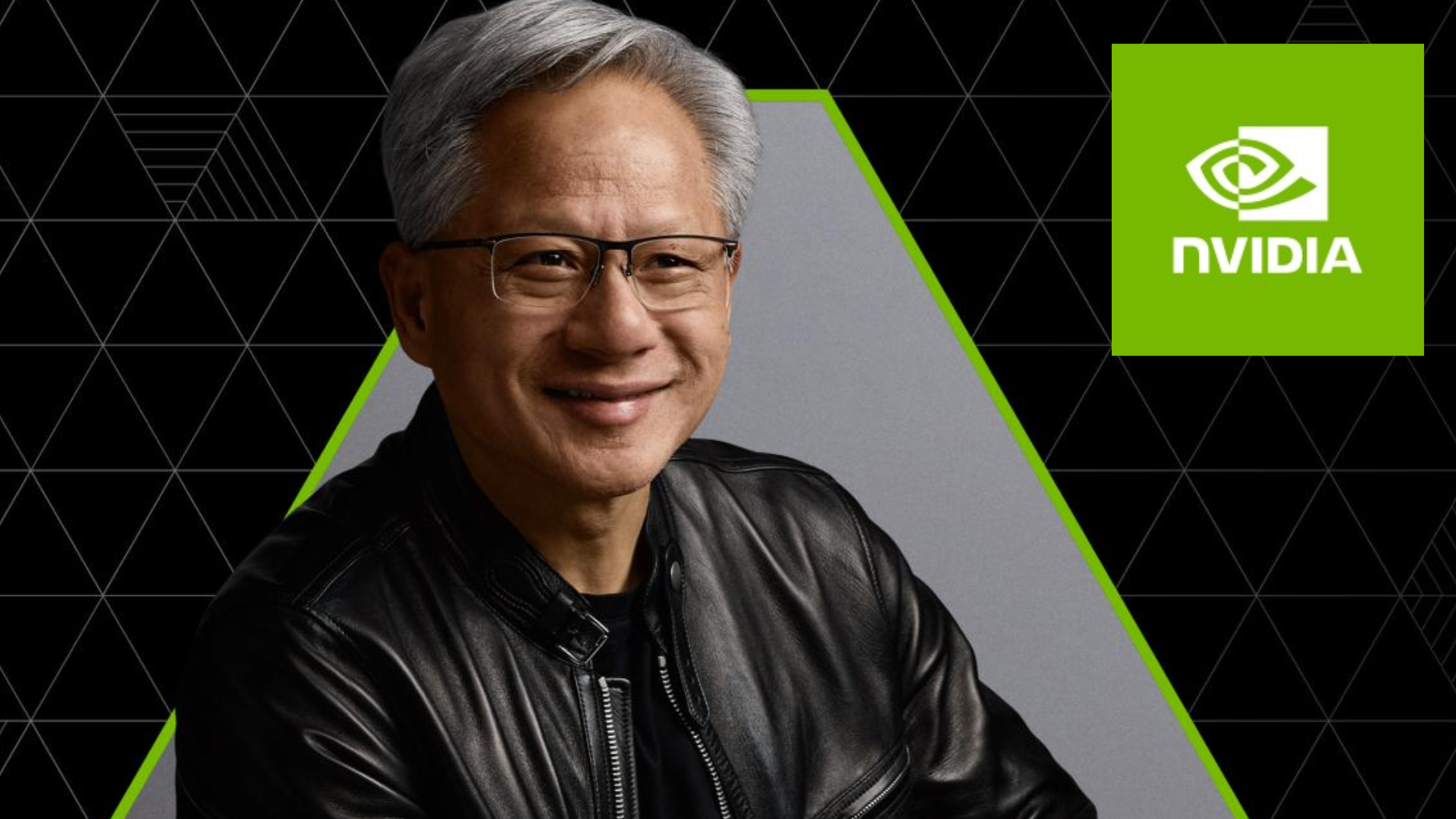
From working at a restaurant as a teenager to becoming the founder and CEO of one of the world’s most influential technology companies, Jensen Huang’s journey is an inspiring story of persistence, innovation, and long-term vision.
Today, Huang leads NVIDIA, a company at the heart of the global AI and accelerated computing industry. But NVIDIA started very differently. Founded in 1993, the company initially focused on graphics technology for personal computers and gaming.
So, how did Jensen Huang and NVIDIA go from a small startup to a global technology leader?
Jensen Huang’s Early Life and Education
Jensen Huang was born in Taiwan and later moved to the United States. His interest in technology led him toward electrical engineering.
He earned a bachelor’s degree in electrical engineering from Oregon State University and later completed a master’s degree in electrical engineering at Stanford University.
Before becoming an entrepreneur, Huang gained experience in the semiconductor industry by working at AMD and LSI Logic. This experience helped him develop a strong understanding of computer chips and semiconductor technology.
The Denny’s Story Behind NVIDIA
One of the most interesting parts of Jensen Huang’s biography is his teenage job at Denny’s.
Huang started working at a Denny’s restaurant in Portland when he was 15. He worked as a dishwasher, busboy, and waiter.
Years later, Denny’s became connected to a much bigger chapter of his life.
In 1993, Huang and fellow engineers Chris Malachowsky and Curtis Priem discussed their idea for a new graphics chip at a Denny’s in Silicon Valley.
That idea eventually became NVIDIA.
How NVIDIA Was Founded
Jensen Huang co-founded NVIDIA with Chris Malachowsky and Curtis Priem in 1993.
The company’s original goal was to develop advanced 3D graphics technology for computers. At the time, the idea of building a company around graphics processing was a significant risk.
However, Huang believed computing would increasingly depend on powerful visual processing.
That vision became the foundation of NVIDIA’s growth.
The GPU That Changed Computing
A major turning point in NVIDIA history came in 1999 when the company introduced the GeForce 256 and popularized the term GPU, or graphics processing unit.
Initially, GPUs were mainly associated with gaming and computer graphics. But their ability to perform many calculations in parallel eventually made them valuable for other types of computing.
Huang recognized that GPUs could become much more than graphics hardware.
This idea would later become extremely important to the growth of artificial intelligence.
CUDA and the Beginning of a Bigger Vision
In 2006, NVIDIA introduced CUDA, a parallel-computing platform that allowed developers and researchers to use NVIDIA GPUs for applications beyond graphics.
CUDA helped turn NVIDIA’s GPUs into a broader computing platform.
This was a major strategic decision because it created a foundation for applications such as scientific computing, machine learning, and AI.
NVIDIA’s investment in GPU computing years before the current AI boom would eventually become one of the company’s biggest advantages.
Jensen Huang and the Rise of AI
The connection between NVIDIA and artificial intelligence became much stronger in the early 2010s.
In 2012, the AlexNet neural network achieved a major breakthrough in image recognition using NVIDIA GPUs. The event demonstrated the potential of GPUs for deep learning and helped accelerate interest in GPU-powered AI.
As machine learning and AI models became more advanced, demand for powerful computing infrastructure grew.
NVIDIA’s GPUs became increasingly important for training and running AI systems.
This helped transform NVIDIA from a graphics-focused company into a major AI and accelerated computing company.
Jensen Huang’s Leadership at NVIDIA
Huang has served as NVIDIA’s president and CEO since the company’s founding in 1993.
One of the defining features of his leadership has been his willingness to make long-term technology bets.
NVIDIA invested heavily in GPU computing and CUDA years before artificial intelligence became a mainstream business opportunity.
That strategy required patience.
Instead of focusing only on what was popular at the moment, Huang and NVIDIA worked to build technology that could support future forms of computing.
Lessons From Jensen Huang’s Career
1. Think Beyond the Present
NVIDIA began with graphics, but Huang continued looking for new applications for GPU technology.
2. Invest in the Future
The company’s early investment in GPU computing and CUDA became highly valuable when AI began growing rapidly.
3. Keep Learning
Huang’s combination of engineering education and semiconductor experience gave him a strong technical foundation for leading NVIDIA.
4. Learn From Failure
NVIDIA has faced difficult projects and major challenges throughout its history. Huang has spoken openly about learning from these experiences rather than allowing setbacks to define the company.
5. Build More Than a Product
NVIDIA’s success is not based only on its GPUs. Its software, developer ecosystem, networking technologies, and computing platforms have all contributed to its position in the technology industry.
The Impact of Jensen Huang’s Journey
Jensen Huang’s journey shows how a long-term vision can eventually create opportunities that were difficult to predict at the beginning.
NVIDIA started as a graphics company in 1993. Over the years, it expanded into gaming, professional visualization, high-performance computing, data centers, and artificial intelligence.
The company’s transformation demonstrates the importance of adapting technology to new markets rather than remaining limited to its original purpose.
Huang’s story is therefore not simply about becoming a successful CEO. It is about recognizing where technology could go next and investing in that future before the opportunity became obvious.
Stay tuned to Article Basket for more updates, inspiring business stories, technology insights, and leadership journeys