Understanding the Recent Trends in Bitcoin
On Thursday, Bitcoin fell to $98,000, its lowest level in six months. This was part of a longer decline that has caused the market value to drop by more than $450 billion since early October. The sharp drop put the world’s biggest cryptocurrency 22% below its October high of $126,272, which means it is firmly in bear market territory.
The steep drop was caused by a huge wave of selling from long-term holders, many of whom started selling their positions at a rate not seen in years. Their departure set off a chain reaction of forced sales in the larger crypto market, which put more pressure on the market and sped up the decline.
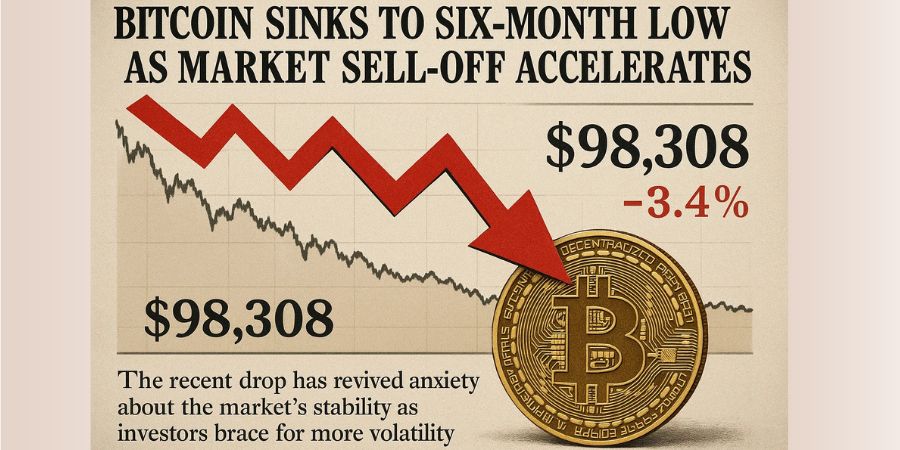
According to market data, Bitcoin’s worst performance since May 7 was when it briefly fell to 98,071 dollars during the day. By late afternoon, it had gone up a little but was still down 3.4 percent, at $98,308. The cryptocurrency officially crossed into a bear market on November 4, when its losses surpassed the 20 percent threshold commonly used to define extended downturns.
The most recent drop has made people worry again about the stability of the market as investors get ready for more ups and downs and try to figure out how long the current correction will last.
You Might Also Like: Why Bitcoin Price Fluctuations in 2025 Could Impact Global Markets