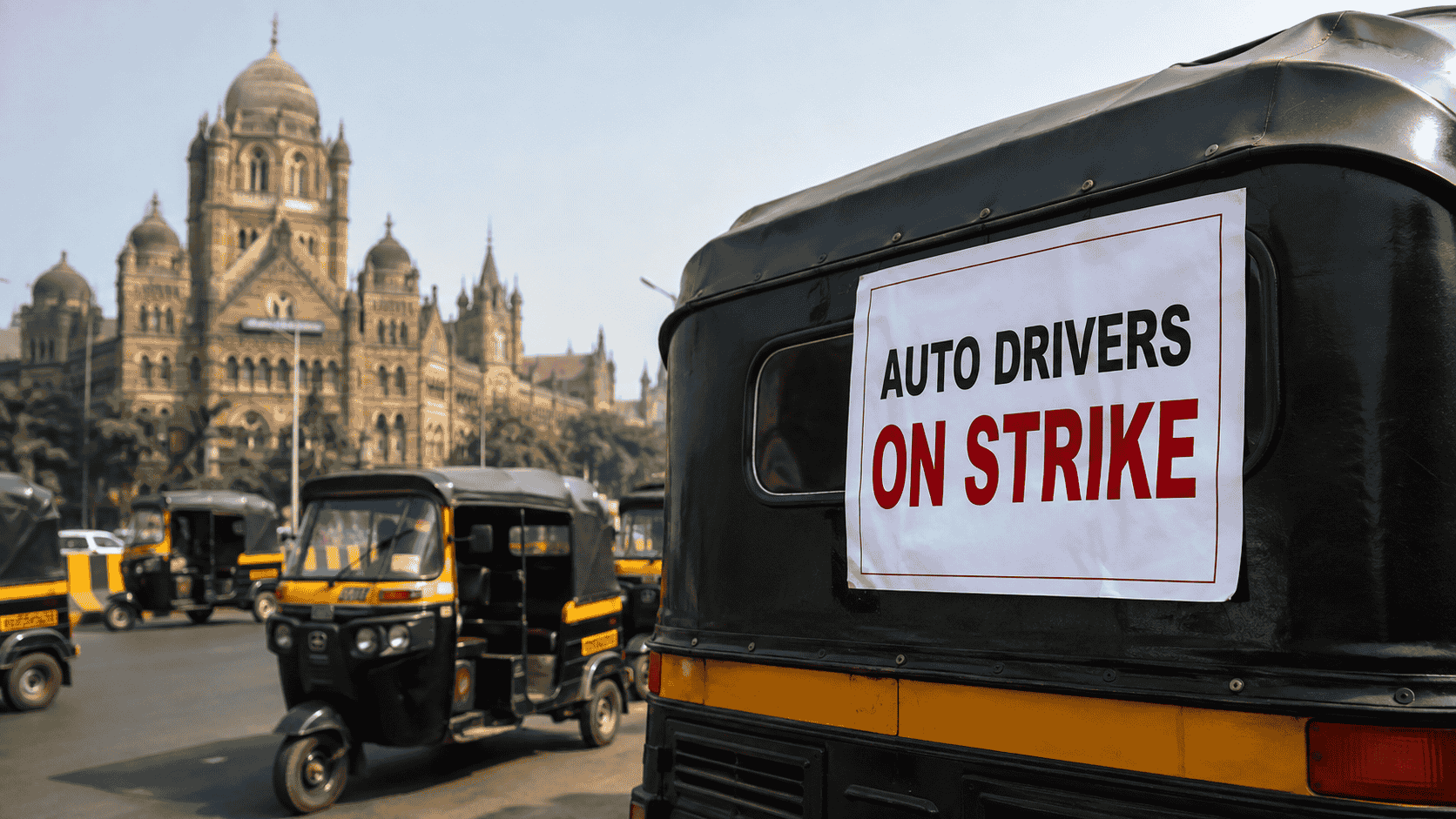
Mumbai has been facing disruption in its local transport services after a section of autorickshaw drivers began a three-day strike on August 24 to protest Maharashtra’s requirement for commercial passenger-vehicle drivers to have working knowledge of Marathi. The protest has also included road blockades in parts of the city, adding to difficulties for commuters who depend on autos and taxis for their daily travel.
The language requirement has become a point of tension between transport authorities and drivers, particularly those who do not speak Marathi. Drivers have said they are not opposed to learning the language, but have raised concerns about the way the proficiency checks are being conducted. Some drivers have alleged that officials asked questions that were beyond what they had been taught or expected to prepare for. This has created frustration among drivers who believe the assessment should be based on clear and basic language requirements.
The ongoing checking drive is aimed at determining whether commercial drivers have the required working knowledge of Marathi. According to the reports, the checks are scheduled to continue until September 30. Drivers who are unable to demonstrate the required knowledge have faced notices and concerns over possible action, making the issue particularly important for those dependent on driving as their primary source of income.
The protest has also affected ordinary commuters. With a section of auto and taxi drivers staying off the roads, passengers in Mumbai have faced difficulty finding vehicles, particularly for short-distance and connecting journeys. The shortage has created inconvenience across parts of the city and surrounding Mumbai Metropolitan Region, where autorickshaws and taxis play an important role in connecting residential areas with railway stations and other transport points.
The government, however, has sought to clarify that the requirement does not mean drivers need to become fluent or highly proficient in Marathi. Maharashtra Chief Minister Devendra Fadnavis said drivers should have basic Marathi knowledge that enables them to communicate in the language for their work. He stressed that the purpose of the requirement is not to make drivers language experts, but to ensure that they can manage basic communication while providing transport services.
The clarification comes as the strike has brought greater attention to the difference between the government’s stated objective and the concerns being raised by drivers. For drivers, the issue is closely connected to their ability to continue working without facing difficulties because of the language assessment. For the government, the requirement is intended to establish basic communication in Marathi among those providing public transport services.
The situation has therefore developed into a wider discussion about how language requirements should be implemented without creating unnecessary uncertainty for workers. Clear assessment standards and an understanding of what constitutes basic working knowledge could help address some of the concerns raised by drivers, while allowing the government to maintain its stated objective.
For Mumbai residents, the immediate concern remains the availability of autos and taxis. As the three-day strike continues, commuters may continue to experience difficulties in finding local transport. The outcome of discussions between the authorities and driver representatives will determine whether normal services return quickly and how the Marathi language requirement is implemented going forward.
Stay tuned to Article Basket for more updates on current news, local developments, and important stories.