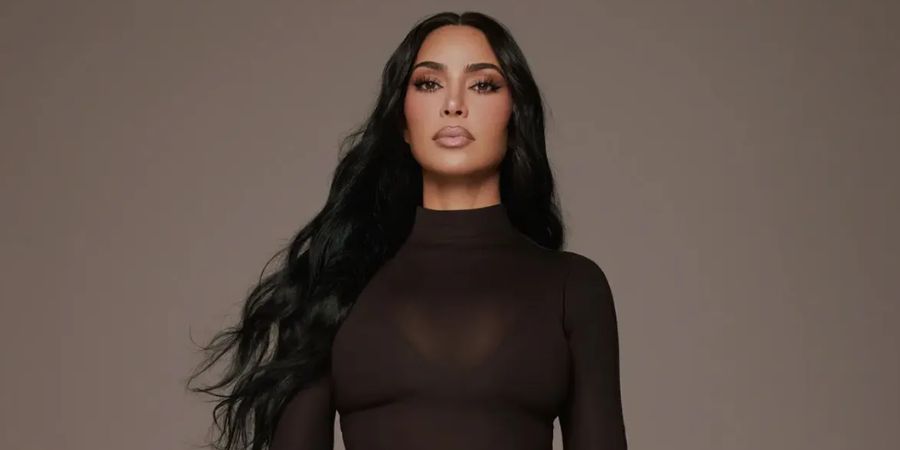
Most shapewear brands stay in a drawer. SKIMS became a billion-dollar empire.
In November 2025, Kim Kardashian’s SKIMS closed a $225 million funding round led by Goldman Sachs Alternatives, pushing the company’s valuation to $5 billion.
That makes SKIMS worth more than Victoria’s Secret and Under Armour combined. The brand is also on track to cross $1 billion in annual net sales, 6 years after it launched with a simple promise: shapewear that actually fits real bodies.
This is the story of SKIMS brand success, how it happened, why it worked, and what every founder can learn from it.
Why Did Kim Kardashian Start SKIMS?
Why did Kim Kardashian make SKIMS? The answer is frustratingly simple.
She couldn’t find shapewear that matched her skin tone. Neither could millions of other women.
Before SKIMS launched in 2019, the shapewear industry was mostly beige. Products came in three or four shades, sizes stopped at XL, and seams showed through tight dresses. Spanx had been the category leader since the early 2000s, but it hadn’t made inclusivity central to its design. Victoria’s Secret was losing relevance fast with its narrow definition of beauty.
Kardashian saw the gap. Along with co-founders Emma Grede and Jens Grede, she launched SKIMS on September 10, 2019, originally under the name “Kimono,” which was quickly rebranded after backlash over cultural appropriation. That fast pivot showed something important: the team was listening and willing to move quickly. Both qualities would define how the brand grew.
The original pitch was simple. Best shapewear for women in shades that actually match skin. Sizes from XXS to 5XL. No visible seams. Comfortable enough to wear all day.
Women responded immediately.
The First Drop That Changed Everything
The launch day numbers are hard to ignore.
Within minutes of the first SKIMS drop going live, the site crashed. The brand generated approximately $2 million in sales in those first few minutes. Products sold out across every size and shade. The waitlist grew to over a million people.
This wasn’t just Kardashian’s fame at work. The product actually solved a real problem. Women who had never been able to buy body shaper for women in their skin tone were sharing their purchases across social media. That word-of-mouth was genuine, and it snowballed fast.
By 2022, SKIMS was generating $500 million in annual revenue. By 2023, that number climbed to $750 million. The SKIMS valuation went from $1.6 billion in 2021 to $3.2 billion in 2022, then $4 billion in 2023, and finally $5 billion in late 2025.
That trajectory, consistent, compounding growth, is what separated Kim Kardashian SKIMS from the dozens of celebrity brands that flame out after the launch buzz fades.
The Product Strategy That Built Loyalty
Inclusive Sizing Wasn’t a Marketing Line – It Was the Product
Many brands talk about inclusivity. SKIMS built it into every SKU.
Every piece of women’s shapewear launches in nine or more skin tone shades. Sizes run from XXS to 5XL. The brand also released an adaptive underwear line for people with limited mobility, featuring easy-access closures in a range of sizes. When the Team USA Olympics partnership launched in 2021 for the Tokyo Games, the collection included adaptive pieces alongside standard styles.
This wasn’t window dressing. Nearly 70% of SKIMS customers are millennials or Gen Z, a generation that notices when brands say one thing and do another. SKIMS did what it said it would do, and customers rewarded it with loyalty and repeat purchases.
“Solutionswear” – A Category SKIMS Invented
Kardashian didn’t position SKIMS as just shapewear. She called it “solutionswear,” products that solve specific, real problems women have with their clothes.
That framing opened the door to expand far beyond a single category. SKIMS by Kim now covers:
- Women’s shapewear and bodysuits (the original core)
- Loungewear and sleepwear
- Swimwear
- Menswear (launched 2023)
- Activewear through the NikeSKIMS collaboration
- Beauty (acquired SKKN by Kim in March 2025)
Each new category didn’t feel like a stretch because they all came back to the same idea: making everyday clothes feel better on real bodies.
Fabric Innovation Drove Word of Mouth
The best shapewear is not the kind you notice. It’s the kind that disappears under clothes. SKIMS’ proprietary fabrics, including seamless constructions, mid-weight compression blends, and soft sculpting materials, became talking points in their own right. When the brand launched its Seamless Sculpt Face Wrap in August 2025, marketing it as “shapewear for your face,” it sold out within 24 hours.
The face wrap worked as a product concept because the brand had already built the trust that its fabrics deliver. That trust came from years of the best shapewear for women living up to its promises, not just in the ad, but in the drawer.
The Marketing That Made SKIMS a Culture Brand
Kim Kardashian’s Reach Is a Business Asset
Kim Kardashian net worth stands at approximately $1.7 billion as of 2025, with her 35% stake in SKIMS representing the largest portion of that wealth. But her value to SKIMS goes beyond ownership.
Kardashian has over 364 million Instagram followers. She is one of the most-followed people on earth. When she posts about a SKIMS new release, it reaches an audience that most brands would spend hundreds of millions in paid media to reach. Instead, SKIMS spends that capital on product development and physical retail.
This created a structural cost advantage. Customer acquisition costs for SKIMS are significantly lower than for traditional apparel brands. That efficiency flows directly into margins and reinvestment.
Celebrity and Cultural Moment Marketing
Kim Kardashian SKIMS campaigns are not generic fashion shoots. They are timed precisely to cultural moments that already have the internet’s attention.
After Usher performed at the Super Bowl halftime show, SKIMS immediately restocked its men’s collection and launched a campaign that rode directly on the viral energy around his name. The strategy was simple and brilliant: go where attention already is.
When Charli XCX’s “Brat” summer took over the internet in 2024, SKIMS released a cotton collection in vibrant colors that fit perfectly into the moment. The products, cotton boxers, soft bralettes, fleece sweatpants, matched the carefree energy of the trend.
The Valentine’s Day 2024 campaign starred Lana Del Rey. The 2025 Valentine’s Day campaign featured Rosé from Blackpink. These weren’t random celebrity bookings. They were carefully timed cultural signals that kept SKIMS relevant across different audience segments.
Other high-profile collaborators have included:
- Snoop Dogg and his family (holiday campaign, loungewear and sleep sets)
- Nick Bosa and Neymar Jr. (menswear)
- The SKIMS x Fendi collaboration in 2021 (luxury crossover)
- Team USA across three Olympic cycles (2021, 2022, 2024)
- Partnership as official underwear partner of the NBA, WNBA, and USA Basketball
Scarcity and Drop Culture
SKIMS uses limited releases, countdown timers, and waitlists to create urgency without discounting. Products regularly sell out within days of launch. This generates press coverage, social media discussion, and FOMO, none of which costs the brand a dollar in paid media.
The model is similar to how sneaker brands operate. Artificial scarcity creates desire. Restocks reward loyal customers. The cycle keeps repeating.
Influencer Marketing at Scale
SKIMS works with both macro-influencers and micro-influencers (10K–100K followers) who share genuine product experiences. Micro-influencer content tends to feel more authentic than brand-produced ads, which matters enormously to Gen Z shoppers. U
ser-generated content under hashtags like #skimshaul creates a constant stream of real testimonials that reinforce the brand’s claims without the brand having to say a word.
The NikeSKIMS Spring 2026 Campaign – The Biggest Bet Yet
In February 2025, SKIMS and Nike announced NikeSKIMS, a joint venture focused on women’s activewear, footwear, and accessories. The NikeSKIMS’ Spring 2026 Campaign brought the collaboration fully to life.
The partnership is a strategic masterstroke for both brands.
Nike has a problem: only about 40% of its customers are women, and apparel represents just 28% of Nike’s brand revenue. Competitors like Lululemon had taken a significant share in women’s performance wear. NikeSKIMS gives Nike access to SKIMS’ audience and SKIMS’ inclusive sizing philosophy.
SKIMS gets access to Nike’s technical performance fabrics, global distribution, and credibility in the sports performance space. The first U.S. collection launched in September 2025, distributed through Nike.com, SKIMS.com, and flagship stores in New York City and Los Angeles. Global expansion is planned through 2026.
When the partnership was announced, Nike’s share price rose 6.2% the day of the news, adding approximately $6.7 billion to Nike’s market cap in a single session. That tells you how seriously the market took the deal.
The Kim Kardashian SKIMS collection under NikeSKIMS includes 58 silhouettes with over 10,000 customizable options, targeting the global women’s activewear market valued at more than $100 billion.
Expansion Beyond Shapewear
Physical Retail: The Next Big Growth Driver
SKIMS began as a direct-to-consumer e-commerce business. That was the right model for launch, direct access to customers, no wholesale margin sacrifice, and full control over the brand experience.
Then in 2024, SKIMS opened its first permanent store in Washington D.C.’s Georgetown neighborhood. More followed quickly: Miami, Austin, Houston, Las Vegas, Atlanta, and a four-level flagship on Fifth Avenue in New York that opened in December 2024.
As of 2025, SKIMS operates 18 U.S. stores and two franchise locations in Mexico. CEO Jens Grede has said stores are “probably our single biggest growth lever” and the “biggest barrier for customers is us simply not being available in physical retail where people live.”
International expansion is accelerating. A 12,000-square-foot flagship on London’s Regent Street is set to open in summer 2026. Dubai is planned for mid-2026. Fifteen stores in Israel are also planned for 2026. SKIMS aims to become a “predominantly physical business” over the next several years, a significant strategic shift from its digital-first roots.
Kim Kardashian SKIMS Where to Buy in 2026
Currently, SKIMS by Kim is available through:
- com (direct)
- 18 owned U.S. retail stores
- Select Nordstrom, Saks, Selfridges, and Harrods locations
- com and Nike stores (NikeSKIMS products)
- Franchise locations in Mexico
Kim Kardashian SKIMS where to buy in international markets will expand significantly through 2026 with London and Dubai flagship openings.
Beauty and Lifestyle Expansion
In March 2025, SKIMS acquired SKKN by Kim, Kim Kardashian’s skincare brand, from Kardashian and Coty, which had held a 20% stake.
The move positions SKIMS as a broader lifestyle platform, not just an apparel brand. A new beauty EVP, Diarrha N’Diaye-Mbaye, was appointed to lead SKIMS Beauty, with products including skincare and fragrance expected in 2026.
The $5 Billion Milestone – What It Signals
Was Kim Kardashian a Billionaire Before SKIMS?
Was Kim Kardashian a billionaire before SKIMS? Not in the traditional sense. Her wealth before SKIMS came primarily from reality television, endorsements, social media, and her earlier beauty brand KKW Beauty. Forbes pegged her at around $600-900 million in the years before SKIMS hit its stride. Her net worth crossed $1 billion as SKIMS scaled, and now sits at approximately $1.7 billion, almost entirely driven by her 35% stake in the company.
Does Kim Kardashian really own SKIMS? Yes. She co-founded it alongside CEO Jens Grede and Emma Grede, and holds the largest individual ownership stake.
How Much is SKIMS by Kim Worth?
How much is SKIMS by Kim worth? As of November 2025, the company is valued at $5 billion, more than Victoria’s Secret and Under Armour combined, and among the most valuable private apparel companies in the United States. Total funding raised since launch stands at approximately $956 million.
Investor Confidence and What It Means
Goldman Sachs Alternatives led the round. BDT & MSD Partners joined. These are not trend-chasing investors. Goldman does not put its name behind a $225 million check for a celebrity vanity project.
Beat Cabiallavetta, Global Head of Hybrid Capital at Goldman Sachs Alternatives, described SKIMS as “a solutions-driven apparel innovator, pioneering new categories and redefining everyday wear.”
That language, solutions-driven, innovating categories, is the language of a platform company. Investors see SKIMS not as a shapewear brand but as a lifestyle platform with the potential to expand into every category women care about.
CEO Jens Grede has long said publicly that SKIMS “deserves” to be a public company. The $5 billion valuation, approaching $1 billion in annual sales, and aggressive retail expansion are all consistent with a company building toward an IPO.
The consumer IPO market was largely stagnant in 2024 and 2025, which is partly why SKIMS chose private funding, but the architecture of a public company is clearly being built.
Competitor Comparison: How SKIMS Stacks Up
| Brand | Estimated Value | Founded | Approach |
| SKIMS | $5 billion | 2019 | Inclusive sizing, solutionswear, celebrity-led |
| Spanx | ~$1.2 billion | 2000 | Original shapewear leader, less social-first |
| Savage X Fenty | ~$1 billion | 2018 | Rihanna-led, similar inclusivity model |
| Victoria’s Secret | ~$3–4 billion | 1977 | Recovering brand, older audience |
The shapewear market growth story is real. The global shapewear market is valued at approximately $7.8 billion in 2025, with strong tailwinds from the blurring of workwear, loungewear, and activewear categories. SKIMS currently captures roughly 12% of that market, and is growing.
Savage X Fenty (Rihanna’s lingerie brand) is the most direct competitor in terms of strategy. Both brands use celebrity founders, inclusive sizing, and social media marketing. SKIMS has an edge in valuation and revenue largely because it expanded earlier into non-shapewear categories and moved faster toward physical retail and strategic partnerships.
The gap between SKIMS and Spanx illustrates how quickly incumbent brands can lose ground when a challenger builds better cultural relevance. Spanx was the shapewear category for two decades. SKIMS made it look slow in 6 years.
What Entrepreneurs Can Learn From SKIMS Business Strategy
SKIMS business strategy offers a clear playbook. It isn’t complicated. But it requires discipline to execute.
- Solve a real problem that a big market has given up on. Shapewear for women of all sizes and skin tones was a genuinely underserved need. The market was huge. The gap was obvious. Finding that combination is the hardest part of building a brand, SKIMS found it.
- Use founder identity as the first marketing channel. Kim Kardashian’s platform replaced what would have been tens of millions in ad spend. But this only works if the founder’s identity aligns authentically with the product. Kardashian had genuinely struggled with the problem she was solving. That authenticity is hard to fake.
- Build product quality that justifies the buzz. Celebrity launches without great products burn fast. SKIMS earned repeat buyers because the best shapewear for women in their lineup actually worked. The brand built loyalty in the drawer, not just on Instagram.
- Expand categories deliberately, not randomly. Each category SKIMS added, loungewear, swimwear, menswear, activewear, felt like a natural extension of the core promise. Nothing felt like a reach.
- Time cultural moments perfectly. The Usher Super Bowl restock, the Charli XCX “Brat” collection, the Valentine’s Day celebrity campaigns, each was executed when attention was already high. Swimming with the current is more efficient than swimming against it.
- Use scarcity to build desire. Limited drops and sellouts create press coverage that would cost millions if purchased as advertising. The SKIMS model converts scarcity into headlines.
The Future of SKIMS – What Comes Next
How SKIMS became successful at $1 billion in sales is one story. The next story is what happens at $3, $5, or $10 billion.
Several things are worth watching:
- IPO likelihood. Jens Grede has publicly stated SKIMS deserves to be public. With $956 million raised in total funding, investor expectations will eventually point toward a liquidity event. The IPO market needs to cooperate, but SKIMS is building toward it.
- NikeSKIMS global scale. The NikeSKIMS’ Spring 2026 Campaign is just the beginning of a collaboration that analysts believe could generate $500 million to $1 billion in annual revenue on its own. As the partnership expands globally through 2026, it could become one of the largest women’s activewear businesses in the world.
- Beauty and fragrance. SKIMS Beauty, built on the SKKN acquisition, is targeting 2026 launches across skincare and fragrance. If SKIMS applies the same drop strategy, inclusive positioning, and founder storytelling to beauty that it used for shapewear, the category could scale faster than the core apparel business.
- International retail. London in summer 2026. Dubai in mid-2026. Fifteen stores in Israel. These are not small bets. SKIMS is spending its Goldman Sachs capital on physical locations in major global fashion cities. The bet is that brand-owned retail creates a customer experience that drives loyalty across markets where SKIMS currently has limited presence.
- SKIMS Kim Kardashian as a platform. The eventual vision appears to be a diversified lifestyle brand, intimates, activewear, beauty, fragrance, all under the SKIMS name. The SKKN acquisition was the first move in that direction. If executed well, SKIMS could look less like a shapewear company and more like a next-generation consumer brand with multiple product verticals.
Conclusion
SKIMS brand success is not a celebrity branding accident. It is the result of a real product that solved a real problem, combined with relentless execution on marketing, timing, and expansion.
The shapewear market growth backdrop helped, but plenty of brands tried to ride that wave and failed. SKIMS succeeded because it made women feel genuinely considered. Inclusive sizing, matched skin tones, seamless construction, these were not talking points. They were the product.
The jump from $0 to $5 billion in six years is one of the fastest brand-building stories in modern fashion. How SKIMS became successful comes down to a founder who understood her customer because she was her customer, a product that delivered on its promise, and a marketing system built around cultural relevance rather than traditional advertising.
Goldman Sachs, Wellington Management, and other sophisticated investors have now bet nearly $1 billion that this story continues. Looking at the trajectory, $750 million in revenue, 18 stores, Nike partnership, London flagship, beauty expansion, it is hard to argue with them.
SKIMS is not just the best shapewear for women. It is one of the most interesting brand-building stories of the decade.
Frequently Asked Questions About SKIMS
Does Kim Kardashian really own SKIMS?
Yes. Kim Kardashian co-founded SKIMS in 2019 alongside CEO Jens Grede and Emma Grede. She holds the largest individual ownership stake, approximately 35%, and serves as Chief Creative Officer. Her stake is the primary driver of her $1.7 billion net worth.
Was Kim Kardashian a billionaire before SKIMS?
No, not in the traditional sense. Before SKIMS scaled, her wealth came from television, endorsements, and KKW Beauty. Her net worth crossed $1 billion as SKIMS grew, and sits at approximately $1.7 billion today, largely from her SKIMS stake.
How much is SKIMS by Kim worth?
SKIMS is currently valued at $5 billion after raising $225 million from Goldman Sachs Alternatives in November 2025. The company is expected to exceed $1 billion in net sales in 2025.
Why did Kim Kardashian make SKIMS?
She struggled to find shapewear that matched her skin tone and fit without visible seams. Recognizing that millions of women faced the same problem, she launched SKIMS in 2019 to offer inclusive sizing (XXS to 5XL) and nine or more skin tone options across every product.
Where can you buy Kim Kardashian SKIMS?
SKIMS is available on SKIMS.com, in 18 owned U.S. retail stores (New York, Los Angeles, Houston, Atlanta, Las Vegas, and more), through select Nordstrom and Saks locations, and via NikeSKIMS on Nike.com. London and Dubai flagship stores are planned for 2026.