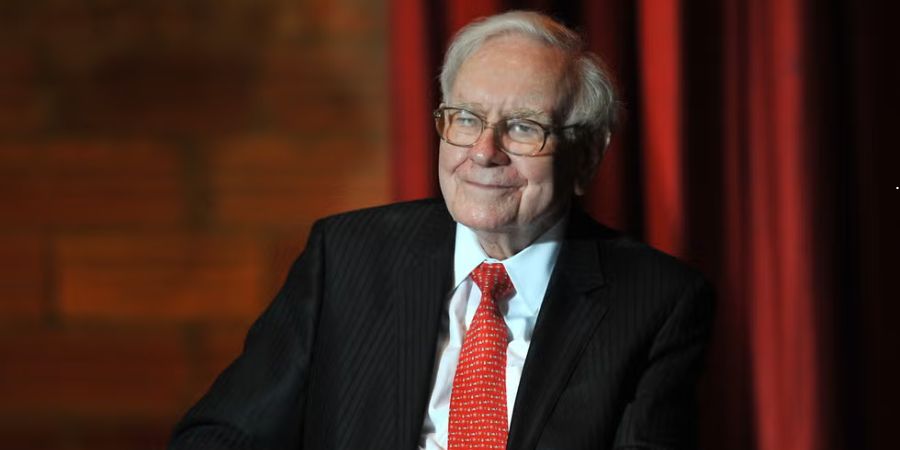
Warren Buffett is quitting as CEO of Berkshire Hathaway in 2025, thus opening an epoch which hardly any business leader has equaled in size or power. By the time he had been with the firm for sixty years, the company’s formal retirement of Buffett was marking a significant occasion for one of the world’s most famous investment houses.
Buffett, who is now 95, has decided that Greg Abel, the vice chairman of Berkshire’s non-insurance businesses, will be in charge of daily operations from January 1, 2026. Abel’s promotion has been highly anticipated considering the succession plans Buffett indicated earlier in the year, but this shift still leads to uncertainty regarding the company’s future without the charismatic leader.
The impact of Buffett on Berkshire Hathaway is very profound and varied. He converted the company from a dying textile factory to a huge conglomerate with a market value of over $1 trillion.
During his time, the company took over insurance companies like GEICO, made its way into BNSF’s railroads, and bought shares in companies such as Apple and American Express. His technique of value investing and disciplined long-term holding has made a lot of investors think of wealth-building in that way.
Buffett will not only step down from the CEO position but also continue as the chairman and a majority shareholder. This signifies that he will still be able to influence and give his opinion on the company’s decisions. He will also keep visiting the company’s headquarters in Omaha and will be in touch with the investment ideas. The ongoing role is meant to ease the transition and reassure the shareholders and the market.
Analysts and investors are already speculating about the future of Berkshire without the daily leadership of Buffett, but his continued involvement is going to aid them in making the right call. One of the primary worries is that the company may not be able to carry on with the same investment standards that were associated with the great man and his investing style.
Part of the charisma of Buffett was his reputation and the network that he had developed over decades. No one can take his “Rolodex” of contacts and personal credibility in deals away from him and certainly no one can replicate them with the same ease.
Berkshire’s capability of coping with market stress has been one of the distinguishing features throughout its history. To illustrate, the company was one of the few that managed to come out of the global financial crisis more than a decade ago, and, in fact, it was one of the major players who supported troubled banks by committing billions when the market was at its lowest.
The big question now is whether the new management will step up or be able to assume that stabilizing role once again.
An alternate point of interest is the enormous cash reserves of Berkshire. The record amount of cash the company has amassed now gives it the power to not only acquire businesses or to invest greatly but also to do all these when the prices are at their lowest.
This huge amount of cash will give Abel various ways, but investors are, however, keeping a close eye on how and when it is used. Buffett has repeatedly pointed out the importance of being patient rather than acting impulsively, and it is not yet clear whether the company’s next leader will follow in his footsteps.
Some of the investment decisions taken by Berkshire lately have also come under fire. The company in 2025 decided to write off billions on its investment in Kraft Heinz, took the latter off its list of core subsidiaries, and lost some of its representatives on the Kraft board. These steps were a clear indication that even Buffett’s methods can suffer from reverse and also a reason for the continuous success of his tutelage to be questioned.
Lateral leadership changes are a phenomenon that occurs not only in the CEO position but also in the rest of the management. One of the most well-known top managers, Todd Combs, is leaving for another company, which will be JPMorgan Chase. The loss of management changes the atmosphere of the company just as the Buffett brush-off takes place.
Nonetheless, a lot of investors and analysts are convinced that the essence of Buffett’s thinking is still present in the culture of Berkshire. The management style is decentralized and leaders of different companies have the power to operate independently, and the long term investment policy is still there. It will be a matter of time to see how the new management will evolve the culture since it will be happening during the period when the old management is still there.
In the end, Buffett’s retirement is as much about legacy as it is about change. He shaped not only Berkshire Hathaway but also the broader practice of value investing around the world. His departure from daily management is a milestone for global markets and for investors who have followed his approach for generations.