India’s push for self-reliance in military technology reached a major milestone as Bengaluru-based artificial intelligence startup Sarvam executed a five-year Memorandum of Understanding (MoU) with Headquarters Integrated Defence Staff (HQ IDS) [S1, S4, S5]. Under this agreement, the startup will design, develop, and deploy AI applications to support the operational, training, and decision-support needs of the Indian Army, the Indian Navy, and the Indian Air Force [S1, S2, S3]. The Sarvam AI defence deal establishes an umbrella framework that extends across all three Services as well as joint and tri-service organisations under HQ IDS [S1, S3, S4].
By building an artificial intelligence layer in India that runs on sovereign compute infrastructure, the initiative directly aligns with the Ministry of Defence’s strategic imperative to reduce dependence on foreign technology [S2, S4]. The umbrella framework allows the armed forces to access shared foundation models, geospatial tools, and agentic systems, ensuring that operational doctrines and technical lessons learned from individual Service projects can be shared across the entire military structure [S1, S3, S5].
Inside Chanakya: The firewalled unit behind Sarvam 105B military applications
To manage national security engagements, Sarvam established Chanakya, a dedicated, firewalled division focused exclusively on defence and national security projects [S1, S2, S4]. Operating independently from the startup’s commercial workflows, Chanakya ensures that sensitive defense data, model weights, and system architecture remain protected within strict security boundaries [S1, S2].
Chanakya will deploy Sarvam’s full artificial intelligence stack, anchored by foundation models such as Sarvam 105B [S1, S2, S4]. By leveraging specialized Sarvam 105B military applications, the unit will build customized capabilities tailored to the complex operational environments of the armed forces [S1, S4]. This sovereign architecture guarantees that the underlying intelligence supporting critical defence infrastructure is developed locally and deployed strictly on controlled domestic hardware [S2, S3, S4].
As Sarvam co-founder Pratyush Kumar stated, “Sarvam exists to build AI in India, for India. The core of that mission is to put the country’s own intelligence into the systems it depends on” [S2, S3, S4].
Core capabilities: Sensor-to-shooter data fusion and agentic workflows
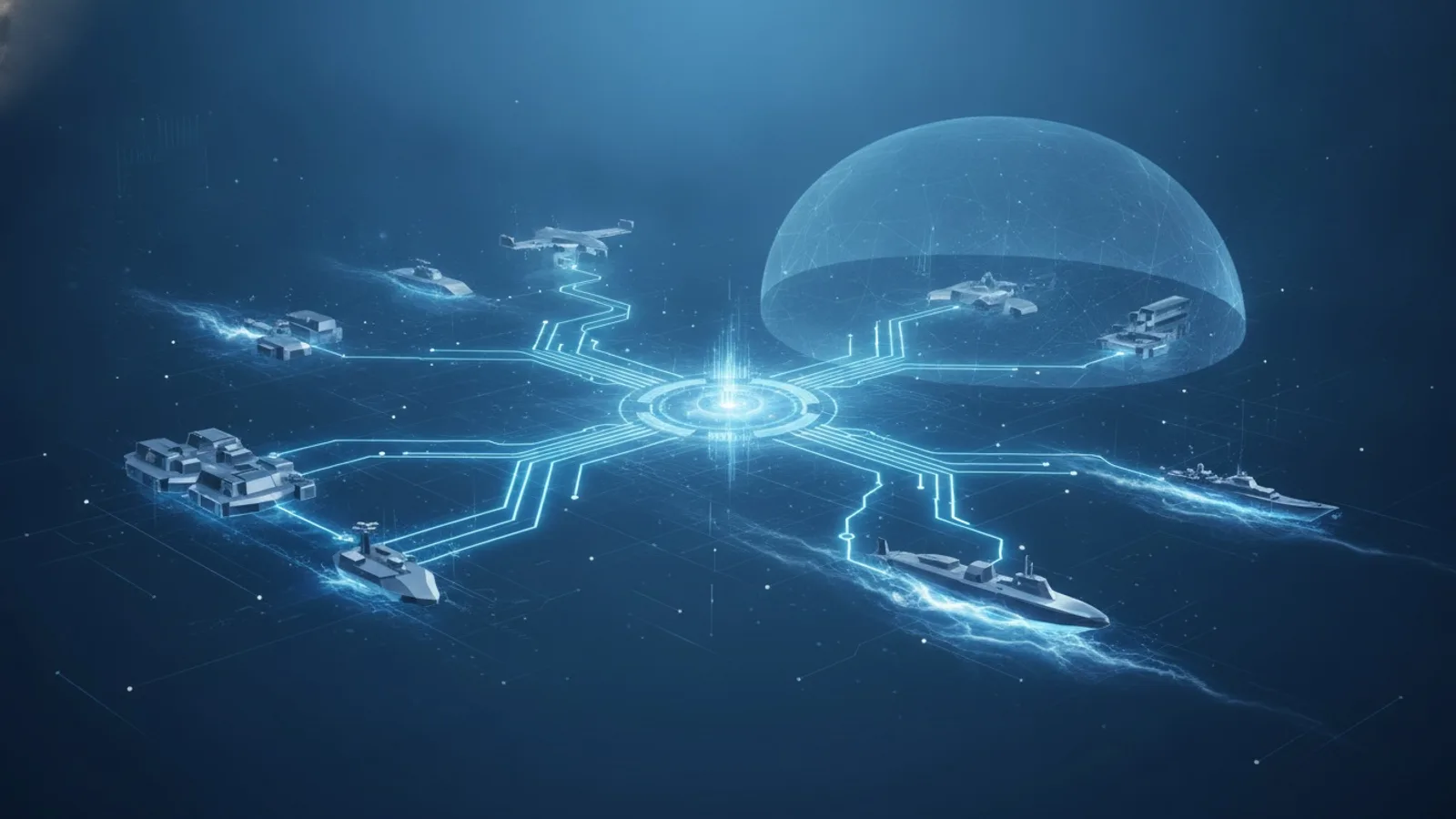
Modern battlefield environments generate vast volumes of unstructured information from disparate platforms, including radar networks, satellite imagery, unmanned aerial vehicles, and ground sensors [S2, S5]. Synthesizing this data manually can slow response times during fast-moving engagements. A primary focus of the HQ IDS Sarvam MoU is automating data fusion across the sensor-to-shooter loop [S1, S2, S3].
Under the framework, Sarvam’s stack will combine sensor data to accelerate target acquisition and provide real-time situational awareness for battlefield commanders [S2, S5]. key operational capabilities being developed under the agreement include:
- Multi-sensor data fusion: Aggregating complex signals from maritime, land, and aerial sensors into a consolidated situational picture [S2, S5].
- Target acquisition support: Utilizing computer vision and perception models to highlight, track, and categorize potential targets across diverse terrains [S1, S2, S5].
- Agentic decision support: Deploying autonomous workflows that assist military planners with operational logistics, tactical training simulations, and real-time risk assessment [S1, S2, S3].
Despite the advanced capabilities introduced by these automated agentic workflows, the framework maintains a firm ethical and operational boundary: human oversight is retained on all operational decisions [S1, S2, S3]. AI models act strictly as decision-support systems, ensuring that target selection and force application remain under human command [S1, S2, S3].
Tri-service integration under the HQ IDS Sarvam MoU
Historically, military branches have frequently developed software solutions in isolation, leading to fragmented tech stacks and incompatible data formats. The agreement between Sarvam and HQ IDS addresses this challenge by establishing a unified AI layer that connects the Indian Army, Navy, and Air Force [S1, S2, S3].
HQ IDS acts as the central facilitator for all engagements under the five-year agreement [S1, S3, S4]. Through this central oversight, all three branches and integrated commands share access to the same foundational infrastructure:
- Unified foundation models: Standardizing the core large language and multimodal models across all branches [S1, S3, S5].
- Shared agentic infrastructure: Enabling autonomous software agents to perform complex, multi-step tasks across joint operational commands [S1, S3, S5].
- Interoperable geospatial and perception systems: Processing terrain data, satellite imagery, and environmental mapping using standardized vision models [S1, S3, S5].
This unified framework ensures that an application developed for maritime surveillance in the Indian Navy can be adapted for ground tracking in the Indian Army or aerial reconnaissance in the Indian Air Force [S1, S3, S5]. Lessons learned and tactical doctrines refined during one project can instantly inform AI deployments across other branches [S1, S3, S5].
Strategic implications for India sovereign AI defence
The selection of an indigenous startup to construct the military’s core artificial intelligence layer underscores a broader shift in national defence procurement [S2, S4]. Relying on foreign AI architectures or cloud infrastructure poses significant risks, including remote service revocation, proprietary data leaks, and foreign intelligence exposure [S2, S4]. Establishing an India sovereign AI defence framework ensures that software logic and critical national security data remain under full domestic control [S2, S3, S4].
While the financial terms, specific project counts, and exact deployment timelines under the MoU have not been publicly disclosed, the scope of the project highlights a long-term commitment to technological indigenization [S2, S4]. In addition to application development, Sarvam is contracted to provide ongoing technical support to ensure systems remain operational and up to date over the course of the five-year agreement [S1, S2, S3, S4].
By embedding domestic intelligence into its defence fabric, India is creating an adaptive, sovereign technological framework capable of supporting joint-service operations in increasingly digitized warfare environments [S1, S2, S4].
Frequently asked questions
What is the primary role of HQ IDS in this AI agreement?
Headquarters Integrated Defence Staff (HQ IDS) acts as the central facilitating body for the MoU [S1, S3]. It coordinates engagements across the Indian Army, Indian Navy, Indian Air Force, and joint tri-service organizations, ensuring that all military branches share a common AI framework and technology stack [S1, S3, S5].
Will AI systems make autonomous strike decisions under this agreement?
No. The agreement explicitly mandates that human oversight is retained on all operational decisions [S1, S2, S3]. The AI stack is designed to assist with target acquisition, data processing, and battlefield decision support, while command authority remains strictly with military personnel [S1, S2, S3, S5].
How does Chanakya protect sensitive defence data?
Chanakya is Sarvam’s firewalled division created specifically for national security and defence projects [S1, S2, S4]. It operates under strict security protocols to build and deploy models on sovereign, controlled compute infrastructure within India, keeping defence data separate from commercial operations [S1, S2, S4].
Sources
- Sarvam and Ministry of Defence sign AI MoU | Sarvam AI (sarvam.ai)
- Sarvam enters defence AI with projects across Army, Navy and Air Force – The Economic Times (economictimes.indiatimes.com)
- Sarvam and Ministry of Defence sign MoU for AI projects across the Indian Army, Navy and Air Force – The HinduBusinessLine (thehindubusinessline.com)
- Govt picks Sarvam to build and deploy AI applications for the Indian military – India Today (indiatoday.in)
- AI to help Indian military identify target, make battlefield decisions? Here’s what the new defence deal with Sarvam offers – The Week (theweek.in)
- Sarvam and Ministry of Defence sign AI MoU | Sarvam AI (sarvam.ai)
Written by
Nirmal Chhajed
Head Publisher