Artificial intelligence can write articles, generate realistic images, answer complex questions, and help businesses automate everyday tasks. But while millions of people are discovering what AI can do, another question is gaining attention: what does it cost the planet to keep AI running?
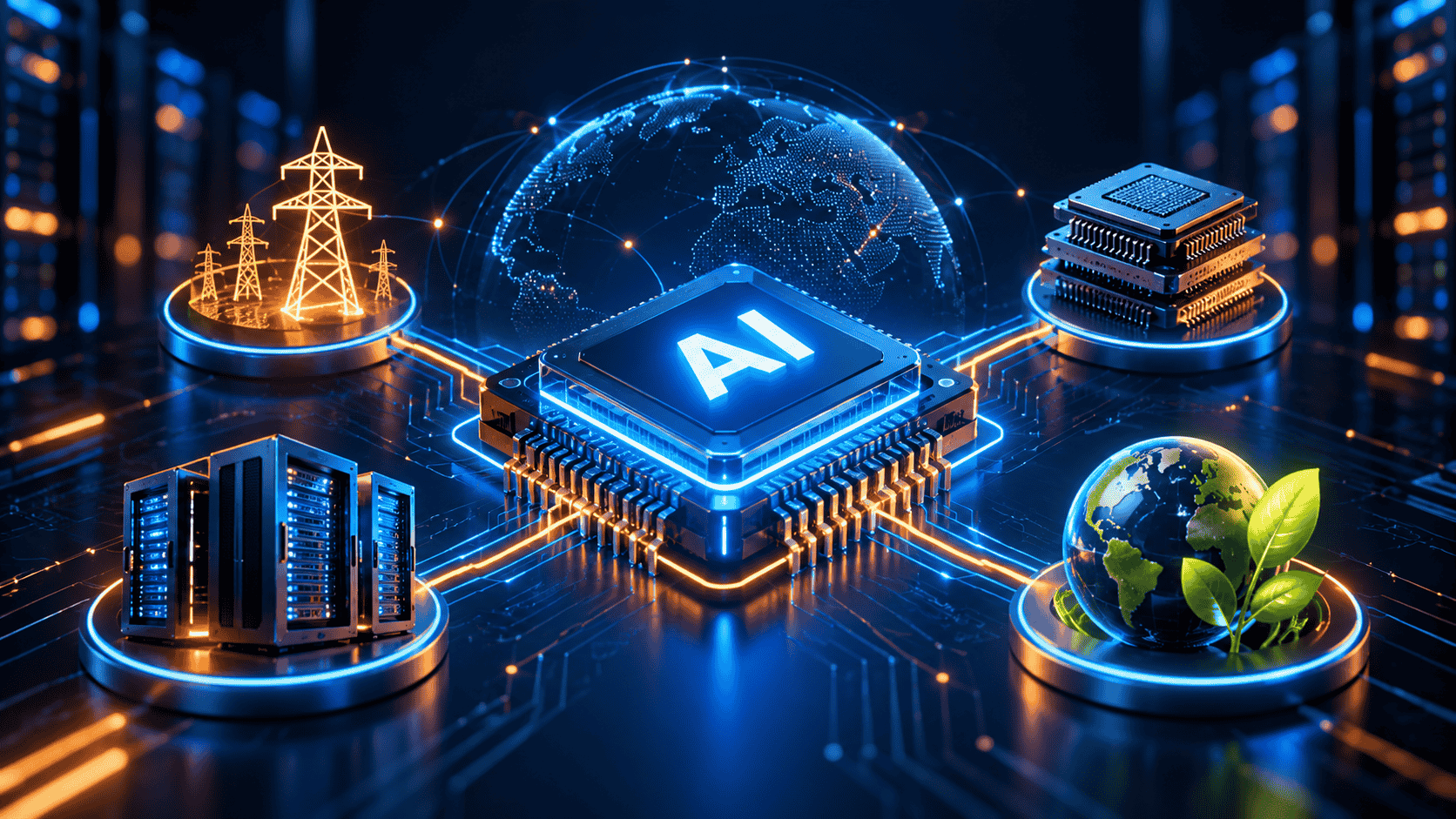
Behind every AI response is a network of powerful computers, specialised chips, data centres, cooling systems, and electricity infrastructure. As AI tools become more popular, the resources needed to operate them are becoming an important technology and environmental issue.
AI Needs More Than Just Software
When people use an AI chatbot, they interact with a simple interface. Behind that interface, however, powerful computers process requests using advanced processors and memory systems.
These machines operate inside data centres that may contain thousands of servers. Training large AI models and running them for millions of users requires substantial computing capacity.
According to the International Energy Agency (IEA), global data centre electricity consumption reached approximately 485 terawatt-hours in 2025. Its 2026 analysis projects that consumption could rise to around 950 TWh by 2030. This includes data centres supporting many digital services, not just AI. <Cite refs={[“turn240973search2”]}/>
The growth of AI is one of the major forces behind this increasing demand.
Why AI Data Centres Consume So Much Electricity
AI systems need electricity at several stages. Powerful processors perform calculations, storage systems hold information, and networking equipment transfers data between machines.
The demand can become particularly high when data centres train large models or run computationally intensive tasks such as generating videos and processing complex requests.
Cooling adds another challenge. Servers produce heat while operating, and data centres must keep equipment within safe temperature limits. This requires cooling systems that also consume energy.
As companies expand their AI infrastructure, they need reliable electricity supplies, suitable locations, and upgraded power equipment. In some regions, the rapid development of data centres is creating pressure on existing electricity grids.
The Water Problem Nobody Should Ignore
Electricity is only part of the story. Water is another important resource in the AI supply chain.
Some data centres use water-based cooling systems to remove heat from servers. Water can also be consumed indirectly when electricity is generated, while semiconductor manufacturing requires water for specialised production and cleaning processes.
The environmental impact varies considerably depending on the facility’s cooling technology, local climate, electricity source, and manufacturing process.
A 2026 report from the United Nations University Institute for Water, Environment and Health highlights how the expansion of AI infrastructure could increase pressure on water resources, particularly in areas already facing water stress.
This creates a difficult question: how should communities balance the economic benefits of new data centres with their demand for local resources?
Why Computer Chips Are Becoming So Important
AI also depends on specialised chips designed to perform enormous numbers of calculations efficiently.
These processors, together with high-bandwidth memory and other components, help AI systems handle complex workloads. As demand for AI infrastructure increases, technology companies need more advanced chips and the manufacturing capacity to produce them.
Chip production itself requires specialised equipment, energy, water, and raw materials. This means the environmental footprint of AI extends beyond the data centre to the factories and supply chains that support it.
Competition for advanced computing hardware can also create supply constraints and increase costs for businesses building AI systems.
Will AI Make Technology More Expensive?
Growing electricity demand does not automatically mean everyone’s electricity bill will rise. The impact depends on local power supplies, grid investments, energy contracts, regulations, and how data centre costs are distributed.
However, rapid infrastructure expansion can create challenges when new facilities compete with homes, factories, and other businesses for limited electricity capacity.
Companies may also face higher costs for chips, cooling equipment, and data centre construction. Over time, these expenses could influence the price of certain AI services and other digital products.
The scale of the effect will vary by market, and improvements in computing efficiency could help offset some of the additional demand.
Can AI Become More Environmentally Friendly?
There are several ways to reduce AI’s environmental footprint.
- Use more efficient AI models: Smaller models can handle many everyday tasks without requiring the most powerful systems.
- Improve cooling technology: Better-designed cooling systems can reduce energy and water consumption, depending on local conditions.
- Expand low-carbon electricity: Renewable energy and other low-carbon power sources can reduce emissions when they replace more carbon-intensive generation.
- Optimise data centres: Efficient hardware, better workload scheduling, and improved infrastructure can reduce wasted resources.
- Measure environmental impact: More transparent reporting can help businesses and communities understand how much electricity and water facilities consume.
These solutions involve trade-offs. For example, a cooling system that uses less water may consume more electricity, so facilities need to evaluate their total environmental impact rather than focusing on a single metric.
The Future of AI Depends on More Than Innovation
Artificial intelligence has the potential to improve healthcare, education, scientific research, business productivity, and many other fields. Its benefits could be substantial, but its infrastructure must grow responsibly.
The challenge is not simply to make AI more powerful. It is to make it more efficient, reliable, and sustainable as more people and businesses depend on it.
The next major AI breakthrough may not be measured only by how intelligently a model responds. It may also be measured by how effectively it uses electricity, water, and computing resources.
AI may live in the digital world, but its costs are very real.
Stay tuned to Article Basket for more updates on artificial intelligence, emerging technology, and the digital trends shaping our future.