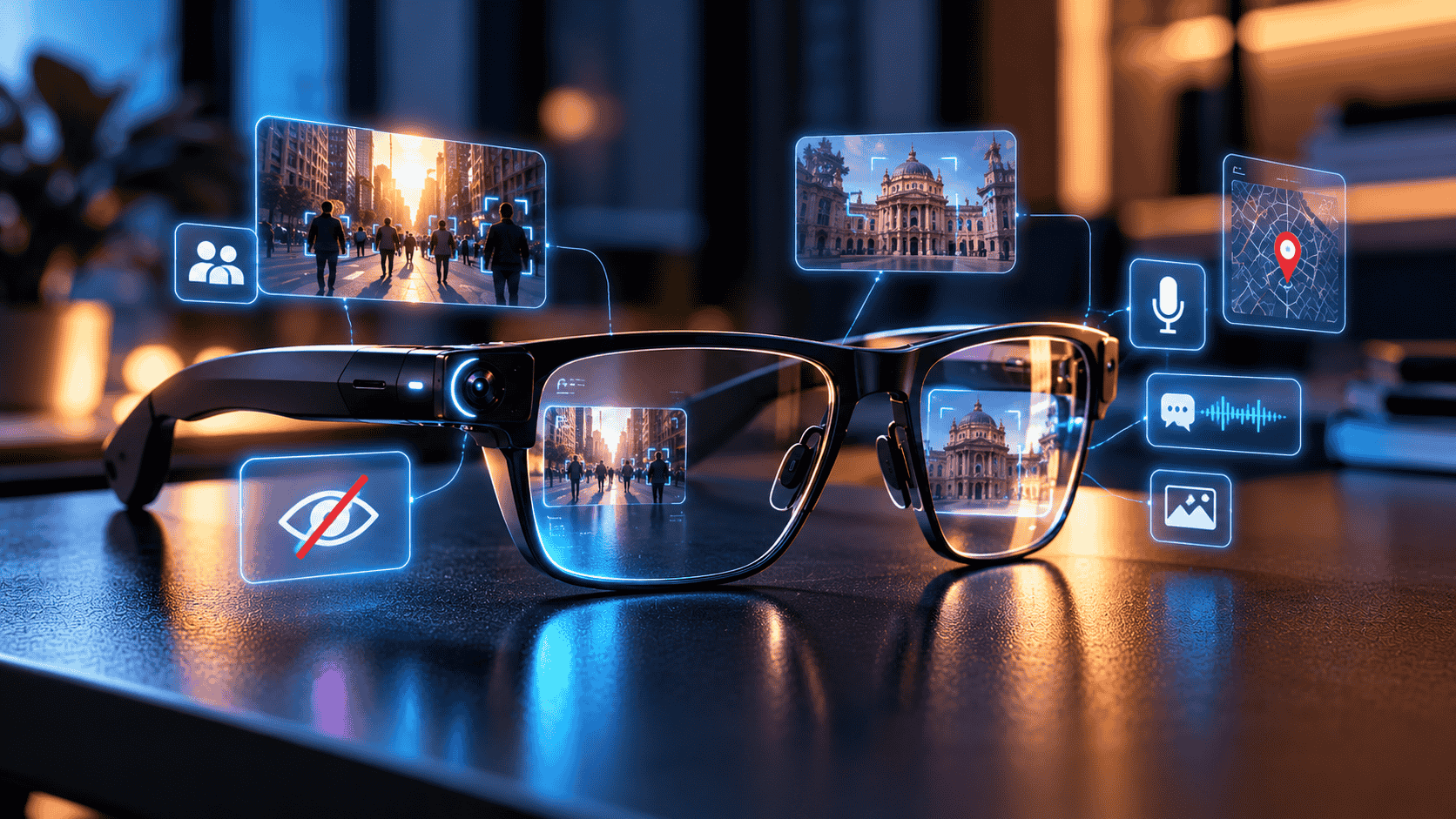
Imagine walking down the street wearing ordinary-looking glasses that can record videos, answer questions, recognise objects, and connect to an AI assistant. You don’t need to take out your phone or press a button on a screen. You simply look at something, and your glasses help you understand it.
This is no longer just science fiction. Smart glasses are becoming a practical part of the wearable technology market. But as these devices become more powerful, an important question arises: are we sacrificing our privacy for convenience?
What Makes Smart Glasses So Smart?
Traditional glasses help you see clearly, but smart glasses add digital features to everyday eyewear. Depending on the model, they may include cameras, microphones, speakers, voice assistants, and AI-powered features.
Users can take photos, record videos, listen to music, make calls, ask questions, and access information without constantly checking their smartphones. Some devices can also describe what the wearer is looking at or help with navigation and translation.
Companies such as Meta and other technology manufacturers are exploring ways to make these experiences more natural. The goal is to make technology feel less like a device you operate and more like an assistant that is always available.
However, the same features that make smart glasses useful can also create privacy concerns.
Can Smart Glasses Record People Without Them Knowing?
One of the biggest concerns is recording in public places.
A smartphone camera is usually easy to notice because someone has to hold up the device. Smart glasses look much more like ordinary eyewear, which can make it harder for people nearby to realise that a camera or microphone is being used.
Depending on the device, its settings, and the way it is used, someone could capture conversations, photographs, or videos in places where others expect a reasonable level of privacy.
This raises difficult questions. Should people be informed whenever they are being recorded? Should restaurants, offices, schools, and other public spaces establish rules for camera-equipped glasses?
Some smart glasses include recording indicators, such as a small light, but indicators alone may not resolve every concern. People may not notice them, understand what they mean, or know whether other features are active.
What Happens to the Data These Glasses Collect?
Recording is only one part of the privacy question. The next issue is what happens to the information after it is captured.
Depending on the product, information may be stored on the device, transferred to a connected smartphone, processed by cloud services, or used to provide AI features. The exact process varies by manufacturer and feature.
Potentially sensitive information can include images, voice recordings, location-related data, and details about a person’s surroundings. If this information is stored or shared, users need to understand how it is handled, how long it is retained, and whether they can delete it.
There is also the risk of unauthorised access. No connected device can be assumed to be completely immune to security vulnerabilities.
Before buying smart glasses, users should review the manufacturer’s privacy policy, app permissions, storage settings, and available controls for managing recorded data.
Could AI Make Privacy Risks Even Bigger?
Artificial intelligence makes smart glasses more useful, but it can also make the privacy debate more complicated.
A camera can capture an image, while AI may help interpret what appears in it. Depending on the system’s capabilities, this could include identifying objects, reading visible text, describing a scene, or answering questions about the wearer’s surroundings.
These features can be valuable for accessibility, travel, education, and everyday tasks. For example, someone with low vision might use compatible AI features to understand signs or identify objects around them.
But AI-powered interpretation also raises concerns about how personal information might be analysed or used. The risks depend on the particular technology, what information it processes, and whether sensitive features are enabled.
The important distinction is that capturing information and analysing information are two different things. As wearable AI becomes more capable, privacy protections need to address both.
How Can You Protect Your Privacy?
You do not necessarily have to avoid smart glasses altogether. A few practical habits can help reduce unnecessary exposure.
- Check privacy settings: Understand which features are enabled and what data they collect.
- Review app permissions: Limit camera, microphone, location, and background access where possible.
- Know when recording is active: Learn how your glasses indicate that photos or videos are being captured.
- Be considerate of others: Ask for consent before recording in private or sensitive situations.
- Understand cloud storage: Check whether recordings or AI interactions may be uploaded or retained.
- Keep software updated: Install security updates and use a strong, secure account password.
Businesses and organisations may also need clear policies for wearable recording devices in confidential meetings, workplaces, and other sensitive environments.
Smart glasses could change how people interact with technology. They may make communication easier, improve accessibility, and bring AI assistance into everyday life without requiring a screen.
At the same time, their growing popularity could make it harder to know when a person is being recorded or when information about their surroundings is being analysed.
The outcome will depend on more than technological innovation. Manufacturers must build meaningful privacy controls into their products, regulators must respond to emerging risks, and users must understand their responsibilities when capturing information about others.
Smart glasses are designed to help people see the world differently. The challenge is ensuring that this technology does not make personal privacy harder to protect.
Stay tuned to Article Basket for more updates on technology, AI, gadgets, and the digital trends shaping our everyday lives.