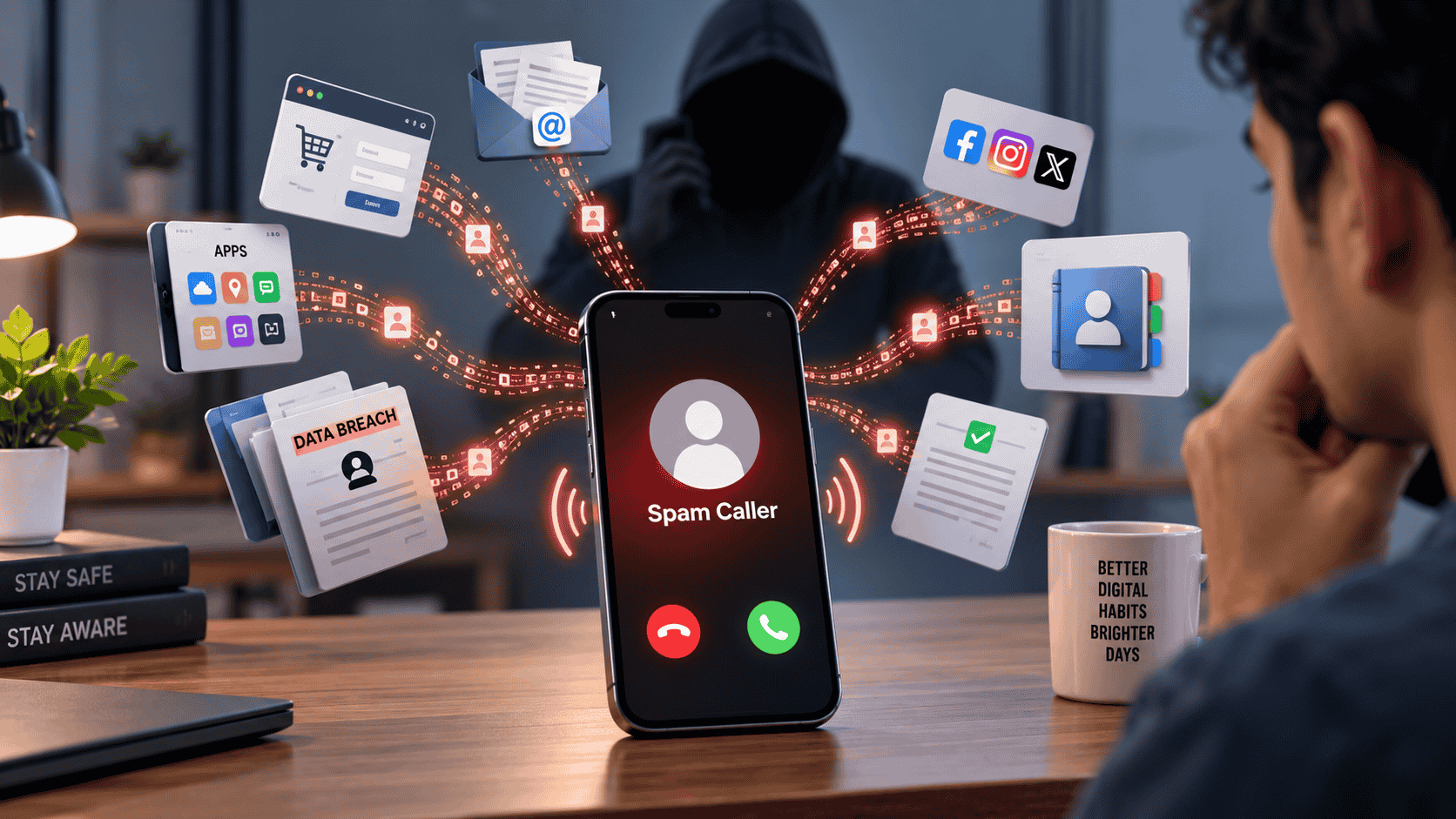
Your phone rings. You don’t recognize the number, but you answer anyway. A few seconds later, someone is offering a credit card, insurance policy, loan, investment plan, or some other service you never asked about.
The obvious question is: How did they get your phone number?
In many cases, you may not have directly given your number to the caller. Your number can reach businesses, marketing databases, or other organizations through several everyday activities.
Here are some common ways it can happen.
1. Online Forms and Registrations
Think about how many times you enter your phone number online.
Shopping websites, contests, surveys, job portals, event registrations, service bookings, and other websites may ask for your mobile number. While legitimate companies have privacy policies governing how they use personal information, not every website handles data in the same way.
A number entered on one website can potentially become part of a marketing database or be shared with third parties depending on the site’s practices and permissions.
2. Shopping and Delivery Services
Your phone number is often required when ordering something online or scheduling a delivery.
Businesses use it for legitimate reasons such as delivery updates, order confirmation, and customer support. However, your contact information may also be used for promotional communication depending on the company’s policies and the consent you provided.
This is one reason you may start receiving promotional calls after using a new service.
3. Apps and Websites
Many apps ask for your phone number during registration or account verification.
Some services need it for security and two factor authentication. Others may use contact information for communication or personalization.
Before providing your number, check why the app needs it and review its privacy settings where available.
4. Data Leaks and Security Breaches
Sometimes the issue isn’t something you did at all.
Companies store customer information in databases. If a database is exposed through a security incident or data breach, information such as names, email addresses, and phone numbers can potentially become available to unauthorized people.
Once information circulates online, it can be difficult to control where it goes next.
5. Publicly Available Information
Your phone number may be publicly visible without you realizing it.
For example, people may post their contact details on business listings, social media profiles, online advertisements, websites, or public directories.
Someone collecting publicly available information could potentially add those numbers to a contact database.
6. Marketing Databases
Some companies specialize in collecting and organizing contact information for marketing purposes.
Businesses may use databases to reach potential customers with promotional messages. If your number enters such a database, you could receive calls from companies you have never interacted with directly.
The exact source of a particular spam call is not always possible to identify.
7. Contact Sharing and Apps
Some apps request access to contacts for features such as finding friends or connecting users.
Depending on the service and its privacy practices, contact information can become part of a broader data ecosystem. This is why it’s worth reviewing which apps have access to your contacts.
How Can You Reduce Spam Calls?
You can’t always prevent your number from being discovered, but you can reduce unwanted calls.
Avoid entering your phone number on websites that don’t appear trustworthy. Check privacy policies before submitting personal information and don’t provide unnecessary permissions to apps.
You can also use your phone’s built in spam protection features and block numbers that repeatedly contact you.
In India, you can also register complaints about unwanted commercial communications through your telecom provider or the appropriate regulatory channels.
Most importantly, never share sensitive information such as OTPs, passwords, banking credentials, or card details with an unexpected caller.
Your phone number may seem like a small piece of information, but once it is shared across multiple services, it can travel much further than you expect. Being selective about where you provide it can help reduce the amount of unwanted communication you receive.
Stay tuned to Article Basket for more useful technology tips, digital updates, and everyday solutions.