US envoys say a large prisoner exchange has been finalised, while Europe's place in future negotiations moves closer. A peace settlement remains unresolved.
What changed after the Abu Dhabi talks?
A proposed prisoner exchange between Russia and Ukraine moved forward after US envoys Steve Witkoff and Jared Kushner met Russian President Vladimir Putin in Moscow and Ukrainian President Volodymyr Zelenskyy in Dublin. At a joint press conference in Dublin overnight into Friday, the envoys said they had finalised an agreement involving thousands of prisoners. [1][2]
That is a diplomatic agreement, not confirmation that the prisoners have already returned home. The reports reviewed for this article do not establish a completed exchange or a final independently verified headcount. [1][2]
Why does the Dublin meeting matter?
The meetings followed two days of US-mediated negotiations in Abu Dhabi, the first direct talks between Russian and Ukrainian delegations in nine months. Those talks produced an agreement on a large prisoner swap, but no major breakthrough on ending the war. [2][3]
Zelenskyy described the planned return of prisoners as a concrete result for families. Kushner said returning thousands of people would be an important milestone. Neither statement means that the wider negotiations have produced a ceasefire or a peace treaty. [1]
Will Europe join the next round?
European participation was another focus. Zelenskyy said Europe should take part directly in the next meeting, rather than hold discussions separately. Kushner said Putin was willing to try including European representatives. These were accounts given after the meetings, not evidence that every detail of Europe's representation had been settled. [1]
A diplomatic timeline published by Meduza on Friday similarly reported that Moscow had signalled no objection to Europe's participation and that another round was expected. It also noted that Europe still needed to decide on a representative. [2]
What remains unresolved?
The Abu Dhabi talks did not resolve the main disputes holding up an end to the war. The prisoner agreement is a narrower humanitarian step. Its implementation, the next meeting's participants and any movement on the wider settlement are separate tests of whether the renewed diplomacy delivers results. [1][2][3]
For now, the clearest distinction is between an announced agreement and an exchange carried out. Reporting the former as the latter would get ahead of the available evidence.
Sources
Checked 14 November 2026.
- Interfax-Ukraine, 13 November 2026: Dublin press conference and envoys' statements
- Meduza, 13 November 2026: chronology of Abu Dhabi, Moscow and Dublin meetings
- Associated Press, 11 November 2026: Abu Dhabi talks and prisoner agreement
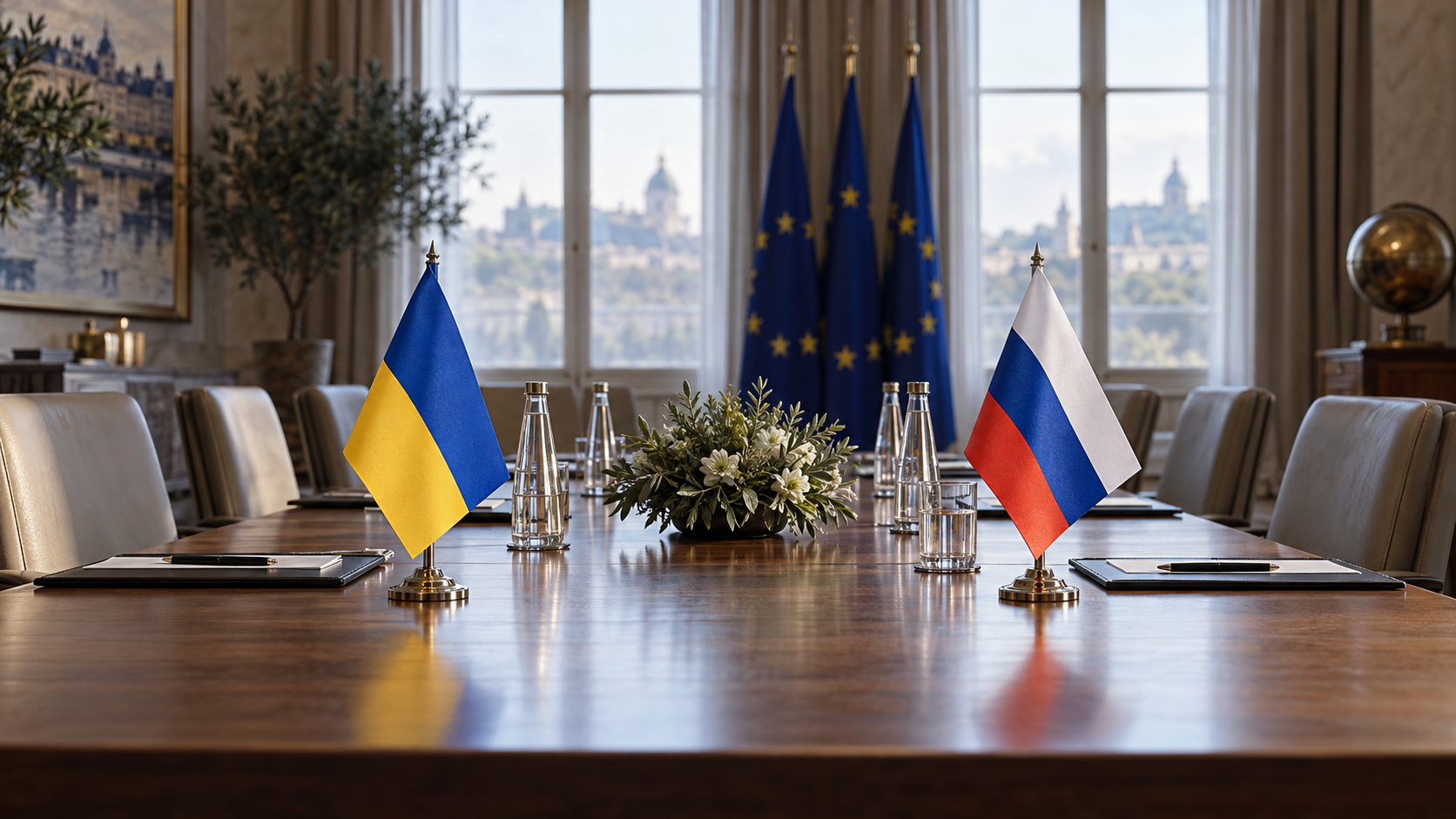
Cover: AI-generated editorial illustration, not a photograph of the reported event.